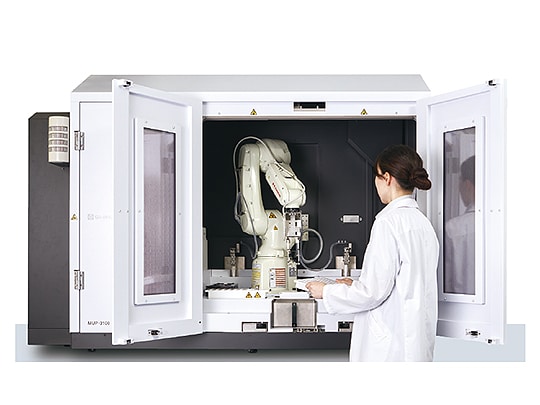
MUP-3100


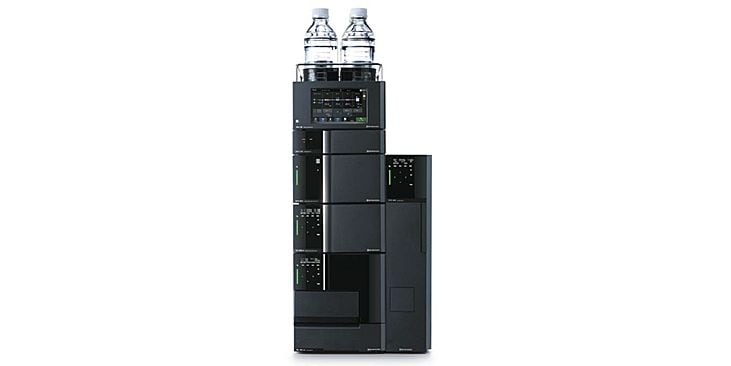
- By simply placing the dedicated reagent kit and the culture supernatant in the system, it can automatically perform all processes, including antibody purification, glycan release, and fluorescent labeling. - In addition to relieving operators from repetitive routine tasks, the system can also automatically pre-treat samples overnight. - Using validated methods to further automate operations, the system enhances laboratory productivity.
Antibody drugs and other biopharmaceuticals are manufactured using genetic engineering and cell culturing technologies, based on peptides or proteins derived from biological organisms as active ingredients. In recent years, many companies have been researching or developing biopharmaceuticals as therapeutic or diagnostic drugs. Antibody drugs include N-linked glycans introduced by a post-translational modification. Due to the potential impact on the safety and efficacy of pharmaceuticals, these glycans are considered critical quality attribute of antibody drugs. However, the glycan has structural diversity as an inherent character and the diversity trends can be affected by slight variations in the cell strains and cultivation parameters used in manufacturing process. Therefore, the glycans attached to antibodies are strictly monitored and controlled during manufacturing processes using appropriate analytical methods that align with the intended purpose. One method used to characterize glycan modifications is glycan profiling, which involves releasing glycans from antibodies using enzymes or other methods, followed by fluorescent labeling and analysis via HPLC, LC/MS, or other techniques. If the given samples are culture supernatants, the process of purifying antibodies has to be included. However, purifying antibodies, releasing glycans, and applying fluorescent labels is a labor-intensive process that can take 2 days or more when performed manually, making the procedure highly person-dependent.
July 29, 2025 GMT
Some products may be updated to newer models