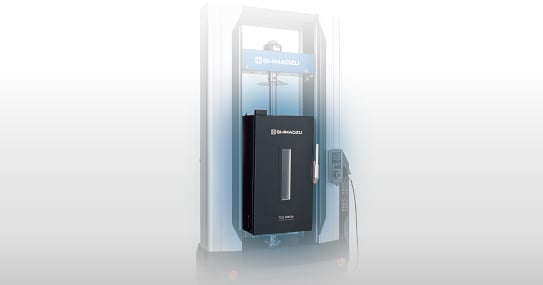
AUTOGRAPH AGS-V Series


- Strength can be measured under actual temperature environments by using a thermostatic chamber. - A simple fixing method with nuts is used, so it is easy to install and remove the sample from the jig. - When the AGS-V is used, strength tests can be conveniently performed with excellent precision.
Lithium-ion batteries are used in a wide variety of fields in modern society, such as mobile phones, notebook computers, and electric vehicles, and the high energy density and long life of this important technology support our lifestyles. One of the most important issues in developing this technology is ensuring the safety of lithium-ion batteries. In particular, the separator within the battery prevents short circuits by physically separating the cathode and the anode, so it plays an important role in maintaining the normal operation of the battery. If the separator is damaged, the cathode and the anode can come into direct contact, causing a short circuit. Short circuits cause rapid heating within batteries, which can lead to fires and explosions. Since separator damage can be caused by various external factors, such as dendrites (dendritic crystals), mechanical impacts, and overloads, evaluating these factors is key to improving safety. Puncture testing, which is widely used to evaluate the strength of separators, quantitatively measures durability and strength properties by applying a load to a separator at a constant speed and measuring the occurrence of puncture failure. This article introduces an example of performing puncture tests on the separator of a lithium-ion battery while varying the environmental temperature.
October 7, 2025 GMT