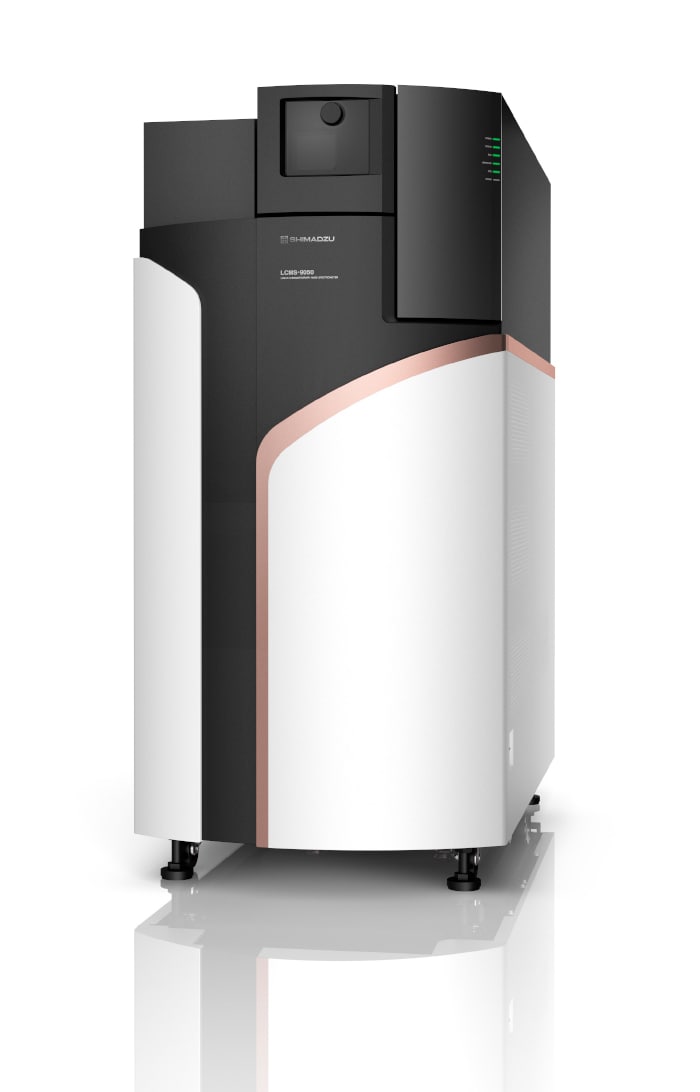
LCMS-9030


- Flexible workflows for untargeted metabolomics using LC/QTOF (applicable to LCMS-9030 and 9050). - A single data independent acquisition (DIA)-MS/MS method for untargeted metabolic profiling of tissues and biofluids. - Application of reversed-phase and HILIC chromatography increases metabolite coverage and reporting confidence in untargeted metabolomics.
The chemical and physical diversity of the metabolome creates challenges in developing methods that generate high metabolite coverage and reporting confidence with a sufficiently high analytical throughput. Reversed-phase high-resolution UHPLC-MS/MS methods are core analytical tools in metabolomic studies of tissues and biofluids. Their strengths include high metabolite coverage, particularly with lipid distributions (for example; phospholipids, fatty acids, fatty acid conjugates and fatty amides) and high reporting confidence for a broad range of polar metabolites (nucleotides, amino acids, purines, pyrimidines and associated derivatives). However, dependent on the study design, tissue type and metabolite class, reporting confidence may be challenged for highly polar metabolite signals. In such cases HILIC can be a powerful complementary technique to help identify metabolites with greater certainty. In this application note, a single data independent acquisition (DIA-MS/MS) method is presented for the untargeted metabolomics analysis of different biological tissues with two alternative chromatography solutions: C18 reversed-phase and HILIC. Figure 1 highlights the reversed phase and HILIC analysis of mouse brain, studied in a C57BL/6 mouse model of ethanol abuse. In this example, several metabolites showed altered brain metabolome perturbations that eluted early in the RP gradient which could be further confirmed using HILIC analysis.
July 21, 2026 GMT