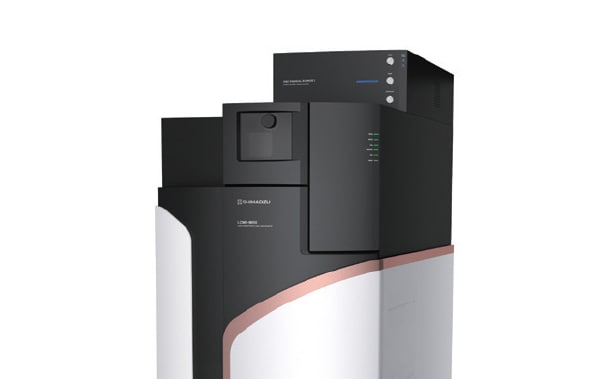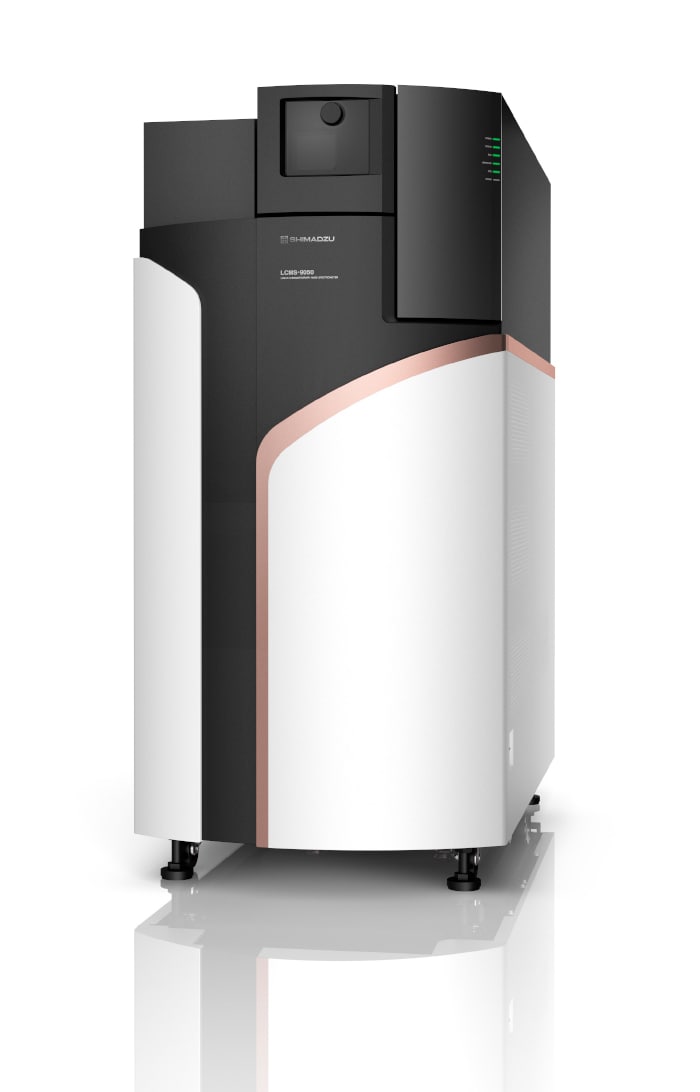
LCMS-9050


- Oxygen Attachment Dissociation (OAD) is a novel radical-induced dissociation technology that uses charge-neutral hydroxyl radicals (OH•) and oxygen atoms (O) used to annotate the positions of double bonds (C=C) in complex lipids. - Simultaneous acquisition of OAD-MS/MS and CID-MS/MS in positive or negative ESI mode enables lipid identification to the structural level. - OAD-MS/MS increases reporting confidence in lipid identification.
Clinical lipidomics research has resulted in a significant advance in the understanding of the dysregulation of lipid metabolism and the association with the development and progression of cardiometabolic and neurological diseases, endocrine system diseases, inflammatory disorders, and several forms of cancer. Mass spectrometry-based technologies have been applied to characterising the lipidome, however, the structural diversity of lipids is complex as a result of different combinations of the molecular backbone, polar head groups, acyl chains, C=C positional isomers, sn-positions, and stereocentres. Oxygen Attachment Dissociation OAD-MS/MS based mass fragmentation, also referred to as radical-induced dissociation, results in C=C-specific fragmentation and annotation of C=C positional isomers. As OAD-MS/MS and CID-MS/MS spectra are acquired at the same time (in either positive or negative ion mode) it results in the identification of lipids at the structural level. In this study, the novel radical induced MS/MS technique of OAD-MS/MS was applied to provide double bond specific dissociation in lipids previously identified as potential biomarkers in pancreatic ductal adenocarcinoma (PDAC) through untargeted metabolomics using similar analytical conditions but with collision induced dissociation MS/MS.
August 4, 2026 GMT