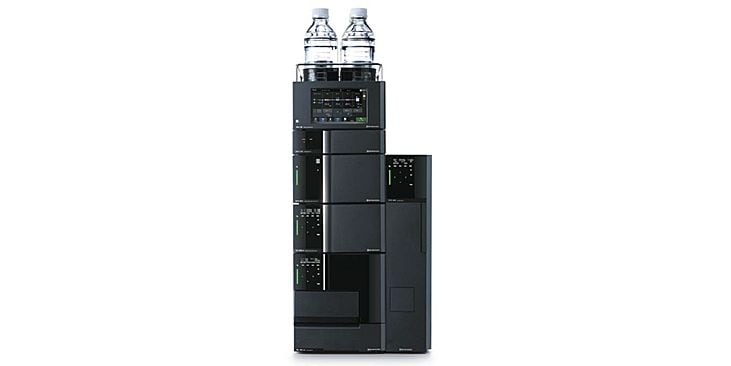
LCMS-TQ RX Series Triple Quadrupole LC-MS/MS


Per- and polyfluoroalkyl substances (PFAS) are a class of synthetic chemicals widely used in industrial processes and consumer products due to their exceptional chemical stability and resistance to heat, water, and oil. However, these same properties make PFAS highly persistent, mobile, and bioaccumulative in the environment. They have been detected in various environmental matrices, including seawater, and have been associated with adverse effects on both human health and aquatic ecosystems. In many coastal regions, seawater is used as the raw water source for desalination plants that produce drinking water, making routine monitoring of PFAS increasingly important in line with the growing regulatory focus, including the EU Drinking Water Directive (EU) 2020/2184 and US EPA Method 1633A for environmental water analysis. The determination of PFAS in seawater is particularly challenging due to its high salt content (approx. 3–4%), which can cause severe matrix effects and reduce LC-MS/MS performance. Conventional analytical methods, including US EPA Method 1633A, typically rely on solid-phase extraction (SPE) to remove salts and concentrate analytes, but these procedures are labor-intensive and increase the risk of background contamination during sample preparation. Direct injection eliminates extensive sample preparation, reduces the potential for contamination, and significantly improves laboratory throughput. However, introducing high-salinity samples directly into an LC-MS/MS system presents challenges related to salt loading and instrument robustness. In this study, a direct injection LC-MS/MS method was developed using the Shimadzu LCMS-8060RX coupled with the Nexera LC-40 Series UHPLC system, manufactured by Shimadzu Corporation, providing a rapid, robust, and sensitive solution for the determination of PFAS in seawater while maintaining reliable analytical performance.
August 16, 2026 GMT
Some products may be updated to newer models