

- Shimadzu Gas Chromatograph 70th Anniversary
- History of Shimadzu GC
- User Interview – DASSAI
- Nexis GC-2060 Developer Interview
Developer Interview
Shimadzu Gas Chromatograph Nexis GC-2060

Introduced as the culmination of 70 years of Shimadzu gas chromatography development, the Nexis GC-2060, equipped with a fully redesigned detector (FID) and a newly developed injection unit (MMI), delivers world-class performance. Developing this instrument required navigating through a series of challenges while maintaining a strong commitment to meeting evolving customer needs. We spoke with the members who led its development.
The New Nexis GC-2060: A Culmination of 70 Years of GC Innovation
—How would you describe the GC-2060 in one phrase?
Fukushima: It is a multimode GC. In the past, when talking about expandability in GC systems, it generally referred to the ability to install multiple options. The GC-2060 offers that kind of expandability, of course, but it also provides a new form of versatility: a single unit that can accommodate a wide range of analytical needs. For example, the FID/MMI supports five operating modes, allowing users to select the optimal mode for their target compounds and work style with minimal changes to the instrument configuration.
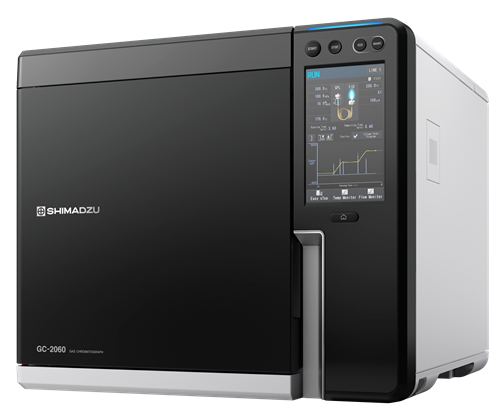
Nexis GC‑2060 — The New Next Industry Standard
The Nexis GC‑2060 is Shimadzu’s latest flagship gas chromatograph, a model that establishes an enduring standard built upon 70 years of accumulated technological expertise. It is equipped with multi-mode injection unit such as the MMI, along with newly developed FID and TCD detectors that deliver world‑class performance. As the culmination of GC technologies refined together with customers over decades, the Nexis GC‑2060 offers both exceptional reliability and continuous innovation, serving as a trusted partner that supports users and advances the industry across generations.
—What kinds of challenges or customer needs led to the development of this product?
-
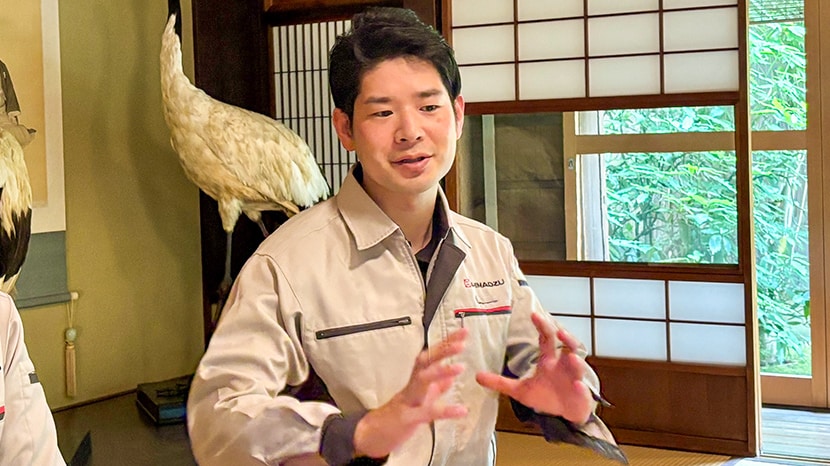
Daiki Fukushima
Development Leader -
Fukushima: The driving force was the changing nature of laboratory work. In recent years, securing skilled personnel and passing down technical expertise to new staff have become major challenges. At the same time, laboratories are expected to achieve higher productivity with limited resources. Against this backdrop, demand has grown for GC systems that are easy to use and fit diverse work styles, and can handle a broad range of analyses.
—How does the new model differ from existing products?
Li: The Nexis GC-2060 is the successor to the Nexis GC-2030. Its external dimensions do not differ significantly from the GC-2030. This was intentional, as it allows customers to continue using existing items, such as columns and consumables. Inside, however, nearly every major unit has undergone a full model change, from the oven at the heart of the system to the MMI injection unit and the FID and TCD detectors. Compared with previous models, the GC-2060 significantly improves analytical stability and efficiency, including oven cooling speed and TCD startup stability.
—When did development begin?
Fukushima: We first began developing the FID and MMI, which were among the most technically challenging components, around 2020.
Nakama: For a detector to be installed in an instrument released during the year commemorating the 70th anniversary of Shimadzu GC, we aimed for a world-class level that would surpass not only competing products but also the technologies Shimadzu had developed over the past 70 years. Simply extending existing technologies would not be enough, so we began development on the premise of a full model change from the very start.
Development Challenges: Balancing Performance and Ease of Use
—What was the greatest challenge in developing the MMI?
Li: The MMI is a unit that vaporizes and introduces liquid samples. Its key feature is that a single unit supports multiple vaporization modes. The greatest challenge was achieving a high level of performance across modes with very different requirements. For instance, in one mode, temperature uniformity is critical, while in another, rapid heating is essential.
However, these two requirements are inherently conflicting. To maintain uniform temperature, it is preferable to increase heat capacity. To achieve rapid heating, heat capacity should be reduced. With conventional technologies, balancing these two requirements was not easy.
We therefore focused on a new concept: using air as an insulating material. During heating, air is retained to help maintain heat; during cooling, air is circulated to release heat efficiently. This mechanism enabled us to achieve both rapid heating and temperature uniformity. As a result, we could deliver performance comparable to dedicated injection units across all modes. In SPL mode, in particular, we reduced the cooling time from several tens of minutes to just a few minutes. Being able to meet a wide range of analytical needs with a single unit while maintaining high analytical performance and operational efficiency was a major accomplishment.
-
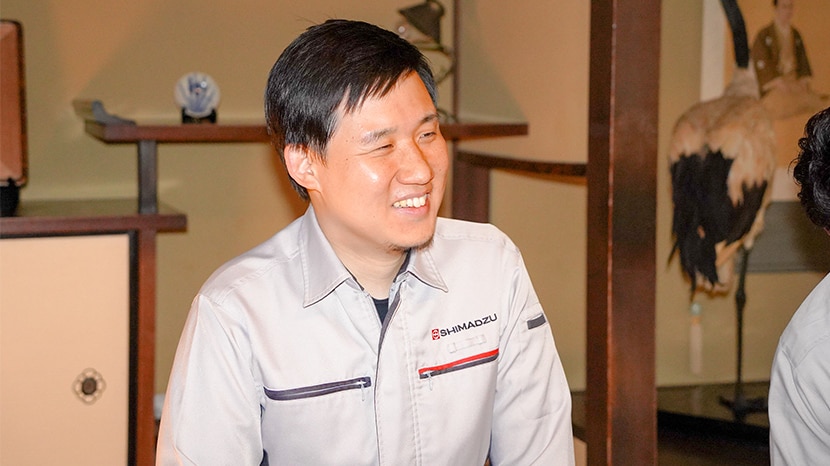
Sixu Li
MMI Team Leader -
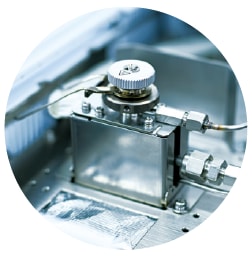
Multi-Mode Injection Unit (MMI)
The new MMI supports split/splitless, programmable temperature vaporization, direct injection, large-volume injection, thermal desorption and extraction modes. This expanded range of injection modes provides greater application flexibility and streamlines operation for even the most challenging samples.
—Is there any episode from FID development that particularly stands out?
Nakama: Yes, there is. Because the FID was completely redesigned, we could not simply use the flexible cable from the previous model. At the same time, the special cable required for the new design was difficult to bend, making it challenging to install in the GC main unit.
One day, when I felt we had reached an impasse, I was talking casually in the laboratory with Mr. Tanaka, a team member. The idea came up that if we separated the high-voltage circuit and placed it near the detector, we could minimize the section that required the special cable.
However, the proposed location was exposed to very high temperatures. It was not a place where electronic circuits would normally be installed. Still, we decided to accept the challenge, believing that this was the only viable solution.
After that, the detector development, mechanical design, and instrument design teams worked together to review the internal airflow to reduce the impact of heat on the circuit. With this combined effort, we designed a new FID that achieves high performance without compromising expandability.
This FID was not created by a single technology alone. It was made possible because many engineers and departments combined their expertise.
-
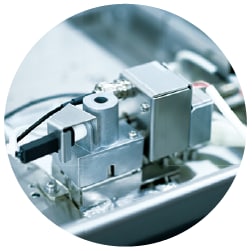
Next-Gen FID & TCD
A complete redesign of the FID and TCD results in industry-leading sensitivity and long-term stability. The Nexis GC-2060 can also be configured with ECD, FPD, FTD, BID, and other detectors, providing the flexibility to support a broad range of applications.
-
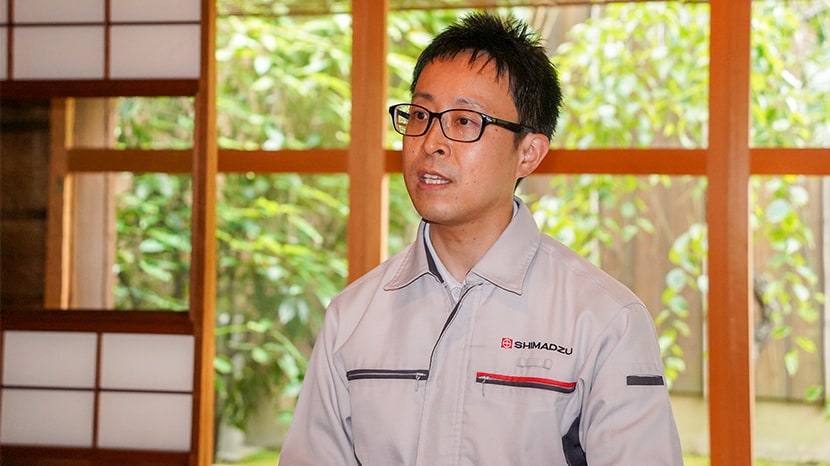
Yuji Nakama
FID Team Leader
—What was the greatest challenge in software development?
-
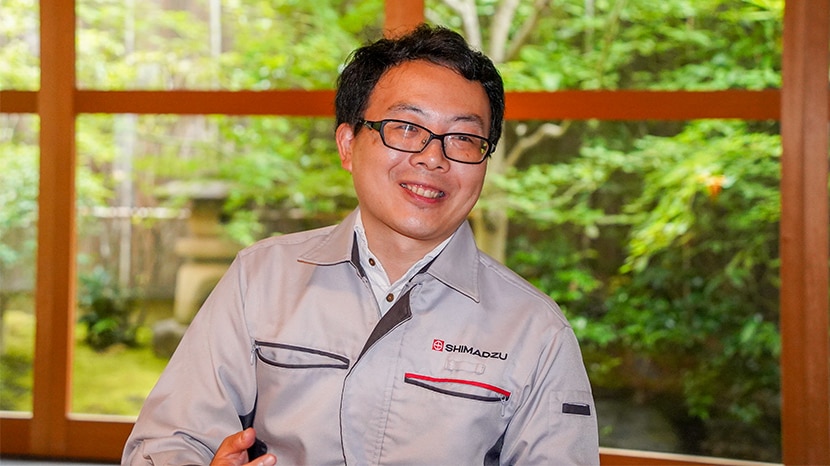
Yasuhiro Kimoto
Software Team Leader -
Kimoto: The MMI has five modes. To customers, it may look as though five new units have appeared. Inside the instrument, however, these modes must be integrated into a single framework for temperature and flow rate control. We had to translate five different ways of presenting information into a central control language and ensure that settings were transferred when switching modes. It was like translating “Japanese to English to Chinese,” while also incorporating complex flow calculations. This was one of the most complex development tasks we had ever undertaken. Together with the lead developer, we discussed the design at the whiteboard every day and refined the UI so that it would be intuitive for users. The high level of completion achieved in each mode, despite the multimode design, is the result of those efforts and is something we are proud to present.
Balancing Cost and Performance
—Were there any challenges beyond the technical aspects of development?
-
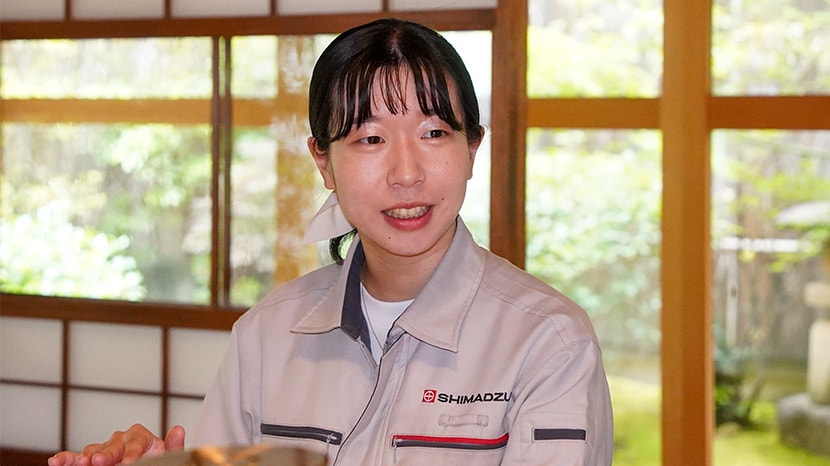
Kasumi Sasaki
GC Main Unit Team Leader -
Sasaki: In recent years, costs have risen across the board, including steel prices and transportation expenses. No matter how well a product performs, customers will not choose it if it is too expensive. Balancing performance and cost was therefore extremely important.
We worked to give individual parts multiple functions, reduce the overall number of parts, and create structures that were easier to assemble. Even with these efforts, meeting the target cost was not easy. Sasaki: In past development projects, cost targets were sometimes not met until late in the process, requiring design changes. For the GC-2060, we worked with factory departments, such as product engineering and production technology, from the early stages of commercialization. The ability to conduct highly accurate cost estimates at a very early stage made a significant difference.
They also helped us with selecting supplies and developing production procedures. In recent years, our factories have started preparing estimates and arranging materials with mass production in mind from the prototype stage, efforts that have made a positive impact on the development project.
What the Developers Valued Most
—What do you value most in development?
Fukushima: What I value most is balance. GC systems are used in a wide range of fields, including chemistry, environmental analysis, food, and pharmaceuticals. Naturally, customer requirements vary, and sometimes they conflict with one another. Analytical performance, safety, cost, usability, and productivity all need to be considered. I believe our role is to find the optimal balance among these many factors.
Kimoto: What I value is discussing the actual product. Documents alone can lead people to form different mental images. When a physical product is available, everyone can look at the same thing while discussing it. With the GC-2060, I believe that repeated discussions around prototypes helped improve quality.
Sasaki: It was challenging to show the actual product, gather opinions, and incorporate them into development, but I am glad we were able to do so.
Li: For me, it is perseverance. Deadlines are always a source of pressure for developers, but we must not allow them to compromise the customer’s experience. I value doing my best within the time available and never giving up.
Building on 70 Years of History to Develop the Next Standard
—How would you position this product within the evolution of Shimadzu GC systems?
Li: The Nexis GC-2060 is Shimadzu’s flagship GC model, designed to continue evolving through feature updates even after installation. Shimadzu gas chromatographs have evolved every eight to nine years through flagship models that incorporated the latest technologies available at the time of release. With the Nexis series, functions such as automatic column aging and gas and energy saving features, can now be provided to customers continuously through software updates after installation. With the Nexis GC-2060, we aim to continue delivering world-class analytical performance and an outstanding operational experience as the instrument keeps evolving after installation.

Meaning Behind the Anniversary Logo
To commemorate the 70th anniversary of Shimadzu's first gas chromatograph, we created a logo inspired by mizuhiki, a traditional Japanese decorative cord. By combining mizuhiki's meaning of “tying together” with the inheritance of technology and connections with people and society, the logo expresses the trust and progress built over 70 years. The single-line composition that continues symbolizes our ongoing commitment to pioneering the next era and our unchanging dedication to quality.
—How do you feel this product carries forward the history of Shimadzu GC?
Li: Over the past 70 years, Shimadzu GC systems have continued to evolve in response to customer needs and the demands of each era. Sensitivity, reliability, expandability, usability—the values required of GC systems have changed over time, and Shimadzu has always responded to those changing needs.
Fukushima: The first flagship model I was involved with after joining Shimadzu was the Nexis GC-2030. What surprised me at the time was the large number of patents that had accumulated over the years.
The world-class performance of the GC-2060 is also supported by numerous patents. Every member of the development team submitted patents for this project. I feel that we have been able to carry forward technologies built by our predecessors and can pass them on to the next generation.
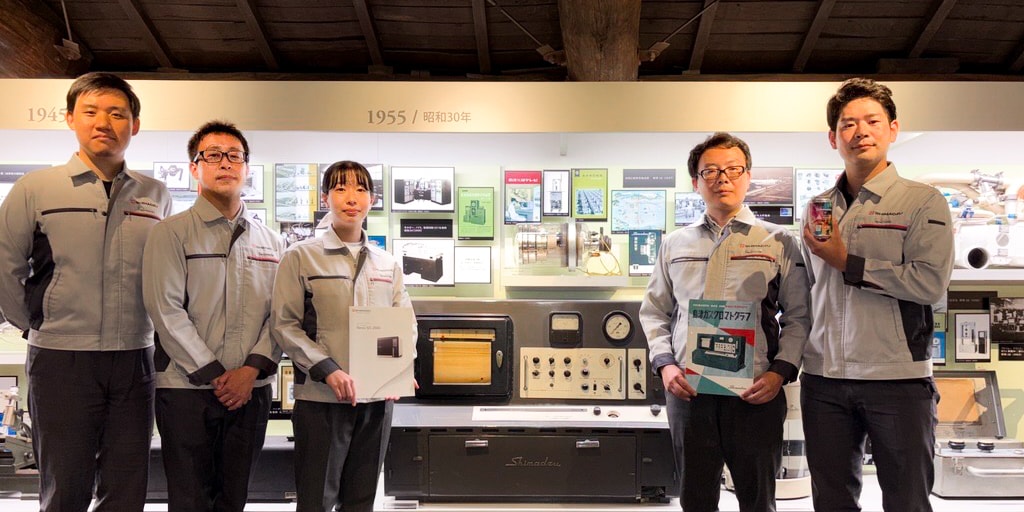
Photographed in front of Shimadzu’s first gas chromatograph, the GC-1A
—After 70 years of evolution, what do you think the “next standard” will be?
Fukushima: Over the past 70 years, Shimadzu has established a strong standard for hardware performance and expandability. Going forward, to create even greater value for customers, we aim to establish new standards in service quality, including application systems, software, and analytical applications. To achieve this, collaboration with other companies, in addition to our own capabilities, will be important.
Kimoto: I believe future development will depend on expanding functionality on the GC-2060 platform and integrating it with peripheral systems. For example, I recently tried running a local AI model on a PC I bought several years ago. When my PC responded, “Hello. How can I help you?”, I was impressed and thought, “I didn’t know it had that kind of potential!” In the same way, even with the same hardware, innovations in firmware and software can continue to increase the value delivered to customers.
Li: I believe the next standard will go beyond improving the performance of the GC itself. It will involve automating and optimizing the entire analytical workflow, from sample preparation to data processing.
A customer’s goal is not simply to operate an instrument; it is to obtain reliable analytical results. That is why Shimadzu aims to go beyond the role of a GC manufacturer and serve as a partner that provides analytical solutions to customers.
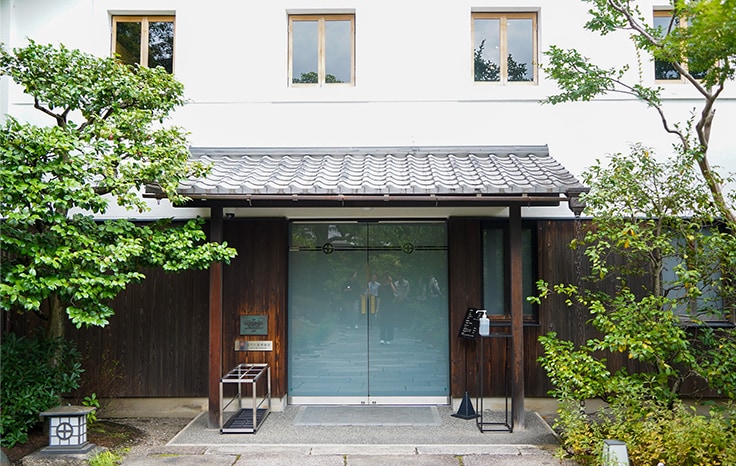
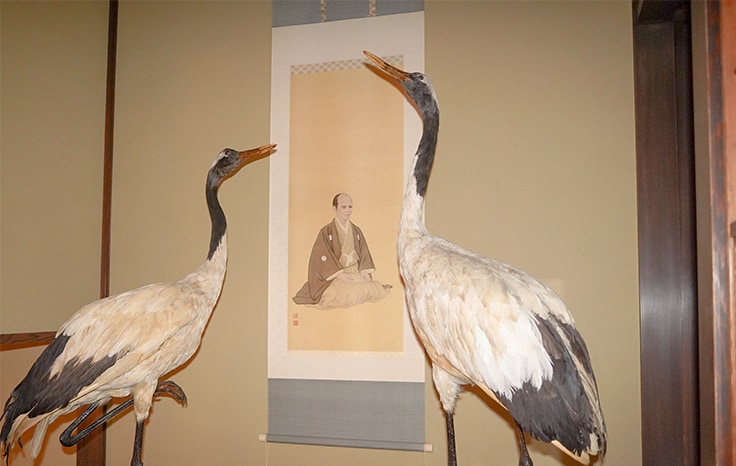
This interview was conducted at the Shimadzu Foundation Memorial Hall, which preserves and shares Shimadzu Corporation’s founding spirit and technological history. Surrounded by the technologies and spirit of challenge that have been passed down over many years, the developers shared their thoughts on the evolution and future of GC.