


MultiNA II MCE-301, Microchip Electrophoresis System for DNA/RNA Analysis - Features
Microchip Electrophoresis System
Simple and Smart Workflow
Designed with the user in mind, MultiNA II delivers efficient, reliable analysis using simple, streamlined operations. Its intuitive software guides users through clear, automated workflows, significantly increasing laboratory productivity.
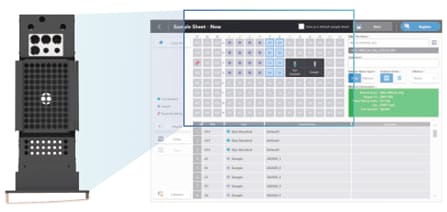
STEP 1 Reliability
Register analysis schedule
Because sample racks can be removed from the instrument for handling, samples can be registered while ensuring proper handling. The software enables easy selection of analysis sequences and allows users to save, import, and export schedules for added flexibility.

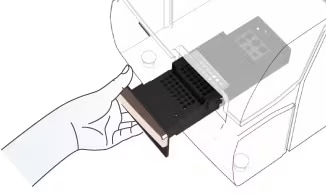
STEP 2 Operating Efficiency
Place samples and reagents
Simply place the samples and reagents in the tray, insert the tray into the system, and start the analysis.

STEP 3 Operating Efficiency
Click the start button
All —from sample dispensing to microchip rinsing— are performed automatically by the system. Data is displayed in real time, starting with the sample currently being analyzed, allowing results to be reviewed immediately.
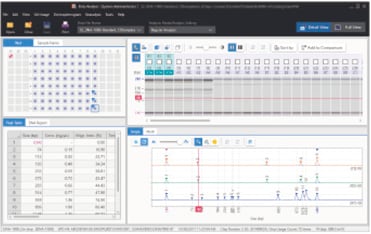
Checking Analysis Results Convenience
Intuitive data analysis software enables instant confirmation of key target information.
Novel Functionality Achieves a New Workflow
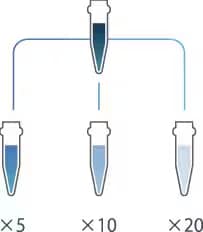
Automated Sample Dilution
Samples can be diluted with purified water to ensure the concentration is within the quantifiable range. The system can automatically dilute samples to the specified concentration level (5, 10, or 20-fold dilution)*1.
*1 Dilution functionality is supported for up to 48 samples. Tubes for dispensing diluted samples are required separately.
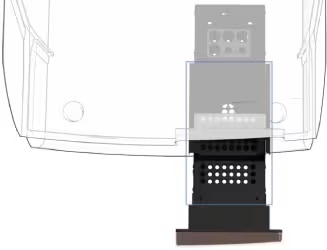
Adding Samples During Analysis
The system can be paused during an analysis to allow adding up to 120 samples. This is particularly useful when analyzing samples from multiple users because there is no need for the analyst to prepare all the samples at the same time or wait until the current analysis is finished.
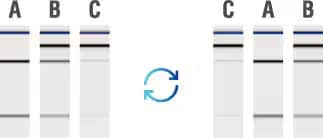
Changing the Order of Gel Images
Gel images can be rearranged into any order, regardless of the original sample analysis.
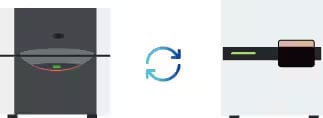
Comparison/Analysis of Past Data
Past data can be displayed next to current data for easy comparison. Even data acquired using a previous model (MCE-202 MultiNA) can be loaded and analyzed*2.
*2 Data analysis is not supported for some reagent kits.
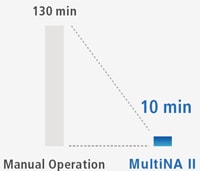
Operating Efficiency
Automatic Analysis Significantly Shortens Analysis Time
Analysis can begin after just 10 minutes of preparation. Fully automated operation significantly reduces hands-on time, while overnight analysis capabilities free up valuable time for research and other business activities.
Reliability
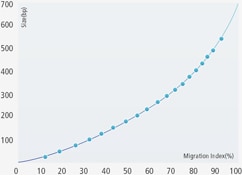
Calibration Curves Used for Automatic Prediction
Predicted fragment sizes and concentrations are calculated automatically, providing objective, quantitative results. Each analysis is normalized using an internal standard reagent to ensure reliable data.

Convenience
Convenience of Using Data
Dedicated data analysis software incorporates powerful, purpose-built tools that make it easier to process, interpret, and act on data across a wide range of applications.
Enhanced Analysis Functions
RNA
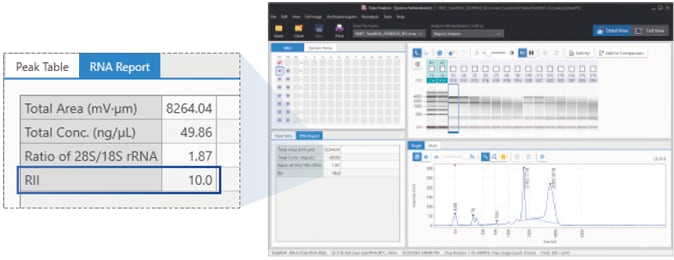
RNA Integrity Index (RII)
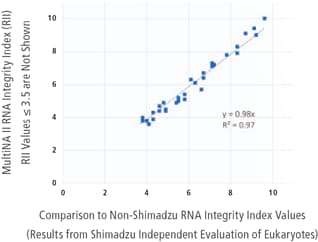
Because extracted RNA begins degrading the moment it is isolated, reliable quality assessment is essential. MultiNA systems provide a built-in solution for computing RII values as an independent indicator of RNA quality. With a coefficient of determination of 0.95 or higher compared to integrity indices from non-Shimadzu platforms, MultiNA delivers confidence and compatibility you can trust.
-
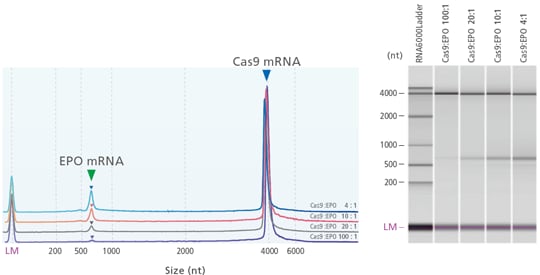
mRNA Analysis: Used for Purity Analysis
Cas9 mRNA (4522 nt) and EPO mRNA (859 nt) mixtures prepared to 4:1, 10:1, 20:1, and 100:1 concentration ratios were analyzed using the MultiNA. The EPO mRNA was clearly detectable for all ratios.
-
DNA
DNA Fingerprinting Analysis
For analysis with a positive control, the presence/absence of a specific DNA fragment in samples can be determined automatically. After analysis, results can be collectively listed or shown grouped with other samples of the same type.
-
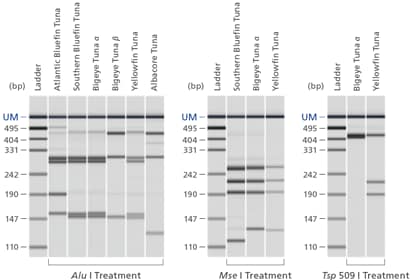
Tuna PCR-RFLP Patterns
-
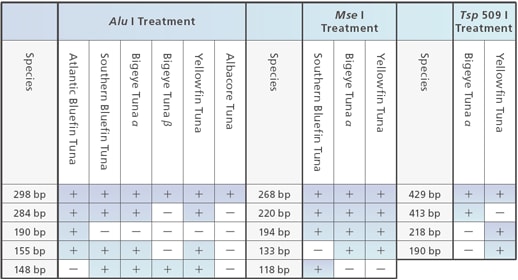
Tuna Discrimination Patterns
User-Friendly Design
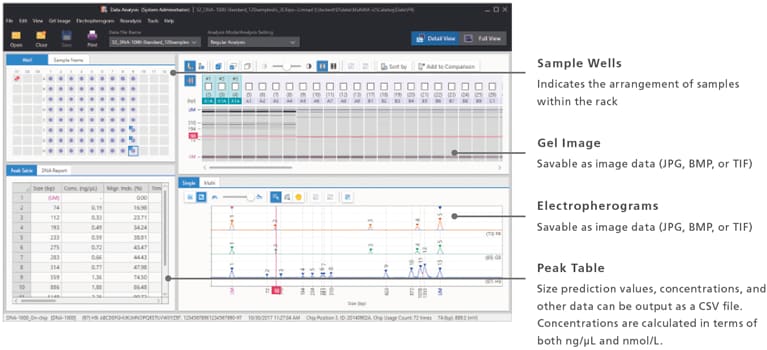
Intuitive Software
In addition to rearranging gel images, it is easy to display size prediction values as size guides (red lines) within gel images or electropherograms.
-
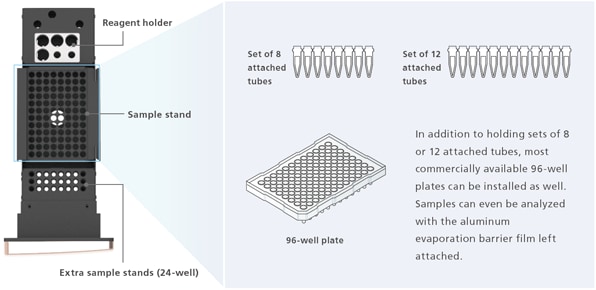
Removable Sample Rack
This removable rack holds up to 96 plates. Up to 2 types of reagent kits can be loaded in a mixed arrangement.
-
Expandable Application Range
Genome Editing
Grouping and molar concentration ratio analysis provide powerful support for fast, reliable screening of genome-edited samples.
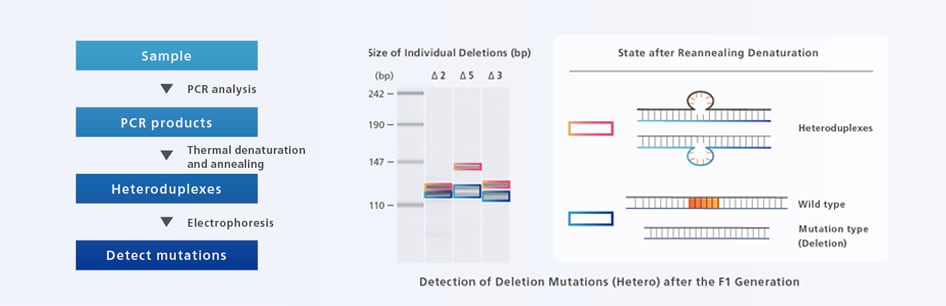
Detection of Deletion Mutations Induced by Genome Editing Tools
Genome-editing technologies have transformed the ability to precisely modify biological organisms, driving rapid growth in research that relies on these tools. The heteroduplex mobility assay (HMA) offers a fast, simple, and cost-effective method to assess whether genome edits have been successfully introduced. Because heteroduplex DNA migrates more slowly during electrophoresis, HMA enables rapid mutation detection and straightforward genotype determination.
-
Grouping Analysis

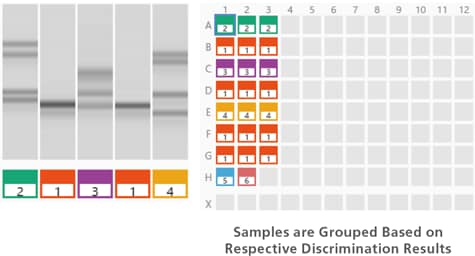
Correlation coefficient values are calculated from heteroduplex mobility assay results, enabling automatic grouping of samples with the same mutation type. This allows reliable, automated discrimination between homo and hetero types, which can be presented in a single, easy-to-review list, a task that previously relied on subjective visual interpretation.
-
Molar Concentration Ratio Analysis
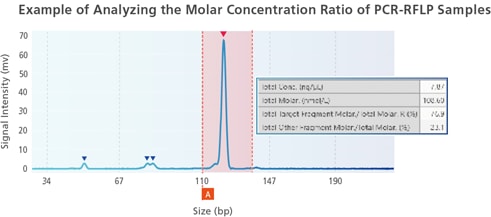
By defining a target size range, the system calculates the molar concentration ratio of peaks (bands) within that range. This enables quantitative evaluation of mutation activity for the designed genome-editing tool using data from HMA, Cel-I assays, PCR-RFLP, and other analysis methods.
Analytical Intelligence is a new concept for analytical devices offered by Shimadzu. It ensures systems and software are operated just like an experienced expert would, by automatically determining whether the system status and results are acceptable or not and by providing feedback to users and resolving problems. It also ensures data reliability by compensating for any differences between user instrument knowledge or experience levels.
NGS
With the high-sensitivity kit, smear analysis functionality, and RNA integr
NGS Library Quality Control
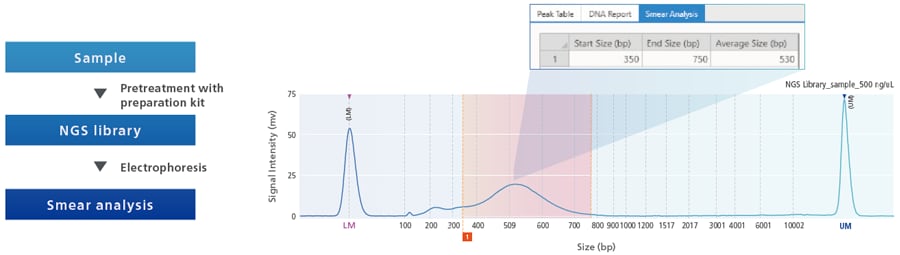
Successful NGS starts with a well-characterized library. The smear analysis feature delivers precise average size and concentration measurements, ensuring a clear understanding of library quality. When paired with the high-sensitivity kit, it enables confident evaluation of libraries at concentrations as low as 5 pg/μL—supporting dependable performance even with low-input samples.
-
High-Sensitivity Kit
Achieve precise, reliable evaluation of library data using the newly released DNA High-Sensitivity Kit.
-
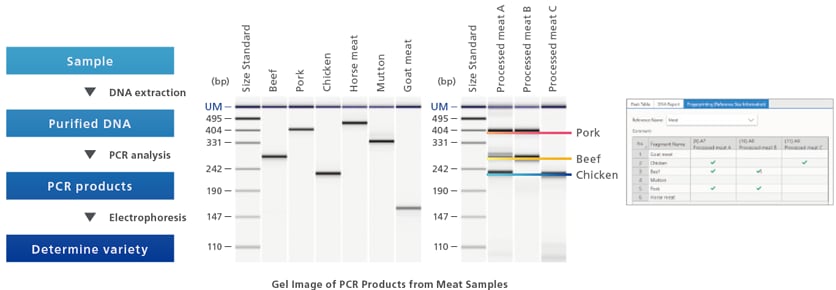
Genotyping
Built-in DNA fingerprinting capability enables fast, accurate, and effortless genotype identification.
Determining the Type of Meat Products
Meat identification based on appearance and texture can be misleading, particularly for processed or less-fresh products.
Using a genetic analysis workflow combining PCR with restriction enzyme digestion overcomes this challenge, enabling confident, highly accurate determination of meat species.
ECO Functions, Energy Savings
MultiNA II uses 30% less power than its predecessor and is 27% shorter, making it an effortless fit even in compact lab environments. In addition, rinsing now uses 75% of the purified water compared to the previous model, representing a significant reduction in liquid waste to support more sustainable laboratory operations.
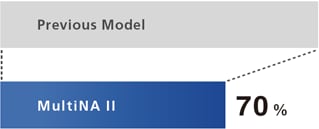
Comparison of Power Consumption by MultiNA II and Previous Model
Energy Savings Achieved
Power consumption has been reduced to 70 % of the previous model, lowering operating costs during analysis and contributing to reduced carbon emissions.
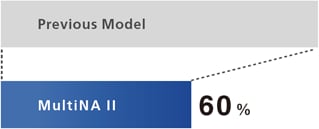
Purified Water Consumption by MultiNA II Compared to Previous Model
Water Savings
The purified water consumption for rinsing has been reduced to 75% of the previous model's level, significantly reducing liquid waste and lowering the system's overall environmental impact.
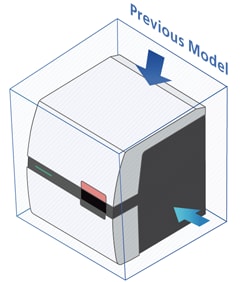
Requires Less Space
The MultiNA II has a 15 % smaller footprint and is 27 % shorter than the previous model (with the front door open), making it easier to install and freeing up valuable bench space.