
AUTOGRAPH AGS-V Series


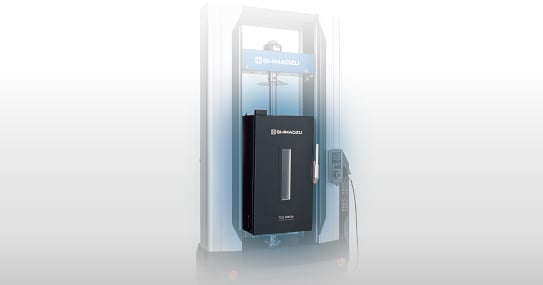
- A thermostatic chamber makes it possible to measure the adhesion force of cathode materials in actual temperature environments. - A copper foil peeling test device enables to conduct peel tests while maintaining a 90° angle in a thermostatic chamber. - By using a load cell with a wider accuracy guarantee range than a conventional one, it is possible to conduct high-accuracy tests even with small test forces.
Lithium-ion batteries play an important role in various electronic devices due to their high energy density and excellent charging efficiency. To improve battery performance, materials and processing methods are actively being developed, and strength measurement is one of the essential evaluation methods. This Application News focuses on the adhesion strength of the electrode sheets used as battery electrodes. An electrode sheet consists of an electrode material that adheres to a current collector, through which electrons move. The electrode material is composed of a cathode active material such as lithium iron phosphate and an insulating material known as a binder. When the adhesion between the electrode material and the current collector is weak, the electrode material may delaminate from the current collector, preventing electrons from moving in the electrode sheet and increasing the electrical resistance. Therefore, evaluating the adhesion strength is important for improving battery performance. In this application, test equipment, test conditions, and results of the peel test for battery cathode materials are described. The temperature dependence of the adhesion strength of the electrode materials is also described.
August 5, 2025 GMT