
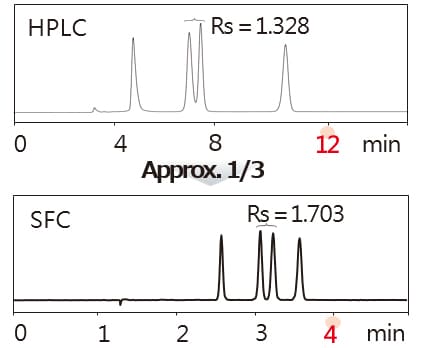
The analysis time can be effectively shortened because an excellent chromatographic resolution can be maintained even at higher flow rates than those typically used for HPLC.


Supercritical Fluid Extraction / Supercritical Fluid Chromatograph
Preparative scale Nexera™ UC Prep is Here
Advances in column technology have led to a renewed interest in supercritical fluid chromatography (SFC), which uses a supercritical fluid as mobile phase. Compared to liquid, supercritical fluids have low viscosity and high diffusivity. By combining SFC with Supercritical fluid extraction (SFE), which utilizes the high permeability and diffusivity of supercritical fluids, the extraction and analysis of target components from solid samples can be automated. The new analytical technology “Unified Chromatography” improves the analytical workflow by integrating sample extraction, analysis by various separation modes, and high-sensitivity detection.
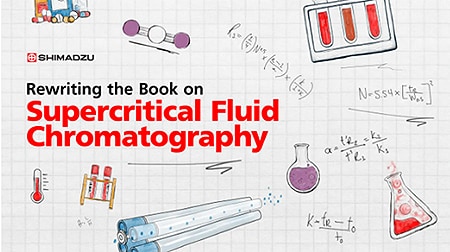
Supercritical carbon dioxide (CO2) displays the qualities of both a liquid and a gas, making it the ideal choice of mobile phase in supercritical fluid chromatography (SFC). Historically, SFC has been overshadowed by other forms of chromatography such as high-performance liquid chromatography and gas chromatography. However, recent developments in SFC technology have transformed it into a highly accurate, sensitive and cost-effective solution that can outperform other chromatography. With the ability to analyze a range of polar and non-polar molecules, and easily transferable expertise and equipment, it's time to rethink SFC, and discover the advantages of supercritical CO2.
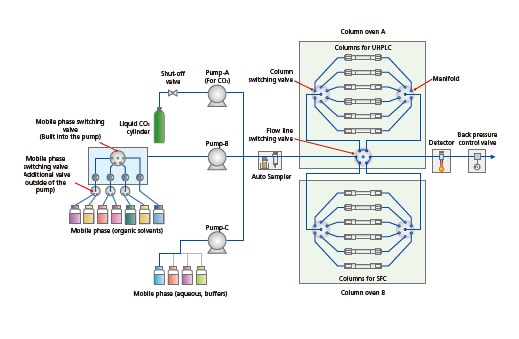

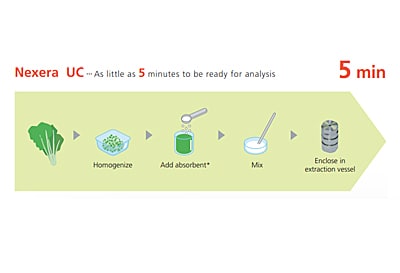
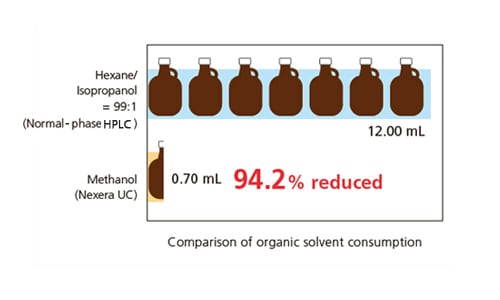
Nexera UC Supercritical Fluid Extraction/Chromatograph System Narration Eddition
Overview of the analytical technologies using supercritical fluid
Green Analytical Chemistry (GAC) is a concept of designing analytical methods that are friendly to both chemists and environment. It is necessary for the GAC-based methods to retain the same analytical performance (e.g., accuracy, sensitivity) as those by their conventional counterparts. Large solvent consumption is particularly concerning in a food analysis where complicated sample extraction and chromatography are routinely practiced. Supercritical fluid is a state of matter just like gas or liquid, and the characteristics of CO2 supercritical fluid are nonflammability, easy handling, and low toxicity, which are relevant to the operator safety. This webinar will show the characteristics of supercritical fluids CO2, the practicality of analytical techniques using it, and the applicability to GAC.
Method development and Identification of Triacylglycerols species with SFC
Analyzing Triacylglycerols (TAGs) is essential to evaluate the quality and functionality of oils and fats. Chromatographic separation by typical methods that include GC and HPLC might be challenging due to a large number of TAGs species. Supercritical Fluid Chromatography (SFC) is one chromatography method that uses supercritical fluid (i.e. supercritical carbon dioxide) as a mobile phase. Here, we introduce the workflow of method scouting of SFC using Method Scouting Solutions and how to establish the optimized analytical method for TAGs species in natural oils and fats.
SFE-ENANTIOSELECTIVE-SFC-QQQ MS FOR THE DETERMINATION OF CHIRAL PESTICIDES IN HEMP SEEDS
This webinar describes how to develop the analytical method for chiral pesticides in hemp seeds by using online SFE-SFC coupled to triple quadrupole mass spectrometry. Additionally, it will introduce the principle of the on-line SFE-SFC system and how eco-friendly it is.
Pfizer drives cancer research breakthroughs with supercritical fluid chromatography
Supercritical fluid chromatography (SFC) is a separation technique that uses a supercritical fluid (most commonly carbon dioxide) as the mobile phase to efficiently purify compounds, offering faster processing, lower solvent consumption, and a more environmentally friendly alternative to traditional liquid chromatography (LC) methods. In this interview, Jeff Elleraas, Principal Scientist at Pfizer’s Global Research and Development in La Jolla, California, shares insights into the role of SFC and how machine learning and AI are transforming chiral separations. Plus, discover Pfizer’s mission to tackle the toughest challenges in oncology research, accelerate medicinal chemistry innovations, and create greener, more efficient processes for developing novel cancer treatments.
Recommended Reading: AI, Automation, and the Future of Drug Discovery Description
In this Drug Discovery News interview, Raymond Wong of Shimadzu UK shares insights into how AI-enabled workflows, connected data, and laboratory automation are helping accelerate pharmaceutical research and development.
Shimadzu SFC User Meeting
At this event, we will welcome distinguished researchers who use Shimadzu SFC systems as speakers. They will present a broad range of topics—from the basics to the latest analytical applications of SFC.
Shimadzu has released the Nexera X4 Ultra High Performance Liquid Chromatograph.
Expanding on technologies cultivated with previous Nexera series models, the next-generation Nexera X4 ultra high performance liquid chromatograph (UHPLC) achieves an incomparable level of analytical performance. The lowest degree of peak broadening* in the industry results in ultra-sharp peaks and outstanding separation performance while cutting-edge fluid control technology provides exceptional solvent delivery consistency, even for fast analysis under ultra-high-pressure conditions, and highly reliable results. Engineered with precision, the high-end Nexera X4 UHPLC offers new value for all laboratories that demand maximum performance.
Nexera IC Ion Chromatograph has been released.
The Nexera IC ion chromatograph combines a compact footprint with uncompromising performance, enabling anyone to perform analysis effortlessly and efficiently.
PL-40, Automation-Compatible Plate Loader for LC/LC-MS Systems has been released
The PL-40 solves for LC/LC-MS automation, it seamlessly loads plates of pretreated samples into an LC/LC-MS system, enabling a fully automated workflow, from pretreatment to analysis.
New Technical Report is available, Optimization of Supercritical Fluid Extraction Parameters for Vitamins D2, D3, and K1 from Pharmaceutical Preparations
New Technical Report is available, Optimization of Supercritical Fluid Extraction Parameters for Vitamins D2, D3, and K1 from Pharmaceutical Preparations
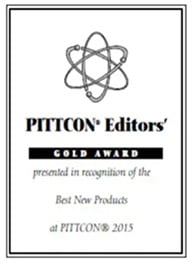
Pittcon Editors' Gold Award 2015
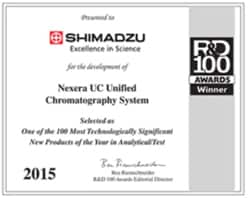
2015 R&D magazine Award

2 Zero hunger

3 Good health and well-being

7 Affordable and clean energy

13 Climate action

15 Life on land
14 Life Below Water