


Evolving Our Manufacturing Strategy and Taking on the Future
Throughout my career in the Aircraft Equipment Division, I have built experience in manufacturing operations and production management while working to improve and advance our manufacturing capabilities. I assumed the role of Director in charge of Manufacturing in April 2026, and I am committed to enhancing corporate value by steadily executing manufacturing strategies that support the Shimadzu Group’s sustainable growth.
Under the Medium-Term Management Plan, the Shimadzu Group has set out to become an innovative company that solves social challenges together with partners around the world. To achieve this, we will enhance the management foundation through the evolution of our manufacturing strategy and steadily capture future growth opportunities.
Central to this effort is the combination of AI and human expertise. AI creates significant value in areas such as demand forecasting, quality inspection, predictive maintenance, and production planning optimization, helping us improve productivity while maintaining stable quality. It also enables us to make improvement opportunities more visible by using accumulated data.
At the same time, the knowledge and know-how of skilled employees remain a core source of competitiveness on the manufacturing floor. As we further expand the use of AI, we will also strengthen talent development, manufacturing capabilities on the ground, and cross-functional collaboration so that we can respond flexibly to changes in the external environment and build a manufacturing foundation that is resilient and continuously evolving.
Manufacturing is a core function that underpins customer trust and a critical foundation for global business growth. We will continue to enhance QCD—quality, cost, and delivery—improve efficiency, and make these gains sustainable—while advancing optimized production allocation and building a resilient, stable, high-quality supply system.
Basic Approach to Manufacturing Strategy
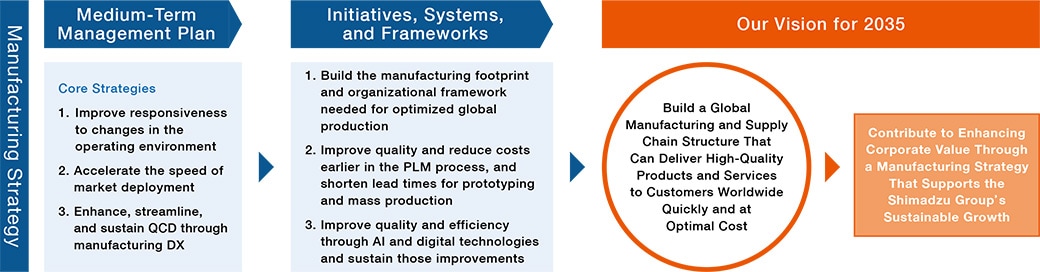
We position manufacturing as a core function in earning customer trust. To support medium- to long-term global business growth, we are continuously enhancing QCD, improving efficiency, and making these gains sustainable, while optimizing our manufacturing footprint and strengthening procurement networks at each site. We are also using AI and digital technologies to advance automation and optimization in procurement and production.
Current Status and Our Vision
Under the previous Medium-Term Management Plan, we adopted “expanding global manufacturing” as a basic policy and implemented a broad range of initiatives, including strengthening manufacturing BCM (Business Continuity Management), increasing global production capacity, and advancing manufacturing DX to transform manufacturing processes.
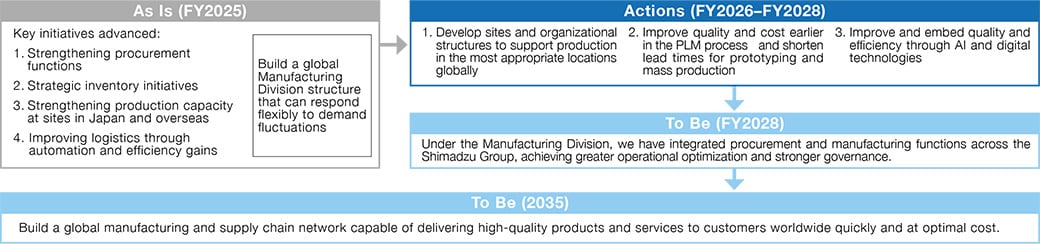
1. Building the Manufacturing Footprint and Organizational Framework Needed for Optimized Global Production
As geopolitical risk and demand volatility become more persistent, we are building a resilient supply system designed for this environment. By advancing optimized production allocation globally, diversifying critical processes, and enabling flexible production adjustments across sites, we will balance stable supply with competitiveness while reducing risk. We will also enhance supply responsiveness and improve end-to-end supply chain coordination by optimizing the supply chain as an integrated whole across procurement, manufacturing, and logistics. By improving visibility into capacity, inventory, and procurement status at each site, we will build a more flexible and resilient supply system.
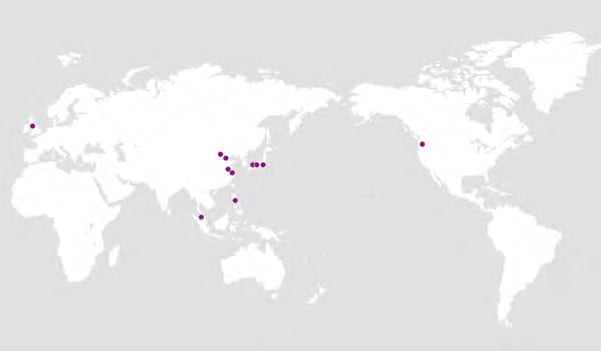
Shimadzu Group’s Global Manufacturing Sites
2. Improving Quality and Reducing Costs Earlier in the PLM Process, and Shortening Lead Times for Prototyping and Mass Production
Manufacturing competitiveness depends not only on factory efficiency. It is maximized by optimizing the entire process as a single flow—from development and design, through prototype validation, to rapid delivery and services for mass-produced products supported by stable procurement.
Along the PLM axis, we will manage the process end to end from planning and design through production launch, improving quality and cost from the upstream stages. Along the Supply Chain Management (SCM) axis, we will connect procurement, manufacturing, logistics, sales, and service to improve the speed of supply responsiveness. By linking these two axes through data, we aim to achieve a step change in QCD through end-to-end optimization.
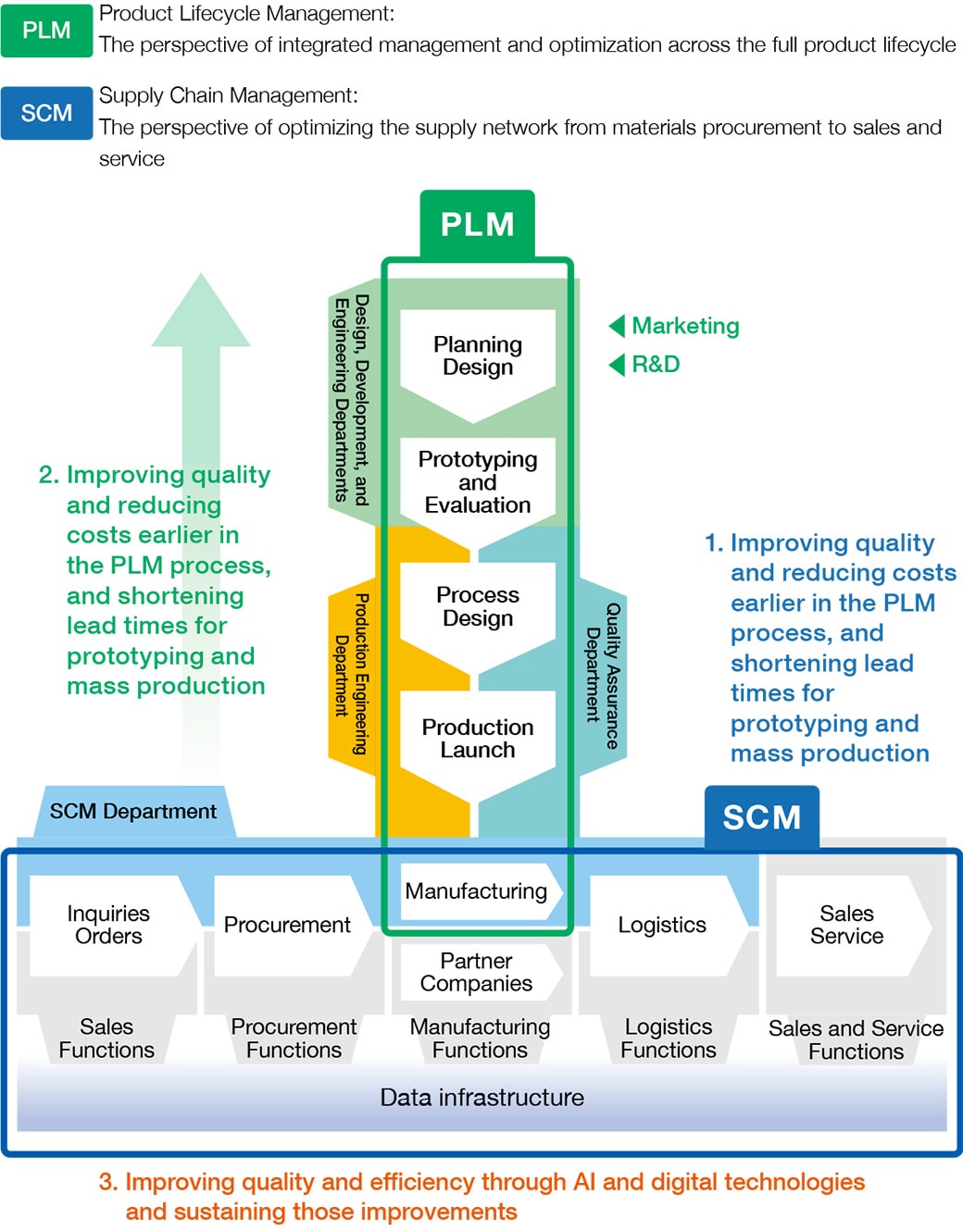
3. Improving Quality and Efficiency Through AI and Digital Technologies and Sustaining Those Improvements
By using AI and digital technologies, we can monitor manufacturing conditions in real time and detect early signs of abnormalities, helping prevent quality issues and equipment downtime before they occur. Going forward, we will deepen the use of data further and accelerate improvements in quality and efficiency across manufacturing.
At the same time, we will build on human strengths—the practical knowledge and know-how developed on the manufacturing floor—so that people and AI complement one another and advance higher-value manufacturing. That includes passing on skills and building a manufacturing foundation that can continue to evolve.
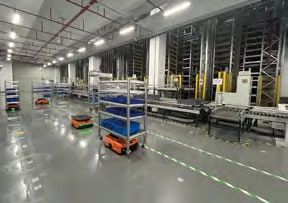
Automated Storage and Retrieval System
and Automated Transport Equipment
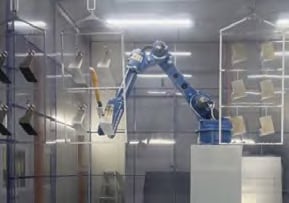
Robotic Painting Equipment
Strengthening the Management Foundation and Driving Profit Through Integrated Manufacturing Functions
In April 2026, we established the Manufacturing Division and consolidated manufacturing functions from across business divisions. This reorganization created an integrated structure for procurement, manufacturing, and logistics, enabling us to strengthen the supply chain, improve governance, and enhance QCD competitiveness through greater operating efficiency.
We will also use physical AI to advance automation on the manufacturing floor and further improve productivity and quality.
Through these efforts, we will strengthen the management foundation that supports sustainable growth and drive profit generation.
Career History
| Apr. 1986 | Joined Shimadzu Corporation | |
| Apr. 2010 | Manager, Production Control, Aircraft Equipment Plant, Aircraft Equipment Division | |
| Apr. 2016 | General Manager, Aircraft Equipment Plant, Aircraft Equipment Division | |
| Jun. 2017 | Deputy General Manager, Aircraft Equipment Division, and General Manager, Aircraft Equipment Plant, Aircraft Equipment Division |
|
| Oct. 2020 | Deputy General Manager, Aircraft Equipment Division | |
| Apr. 2021 | General Manager, Aircraft Equipment Division | |
| Apr. 2026 | Managing Executive Officer In charge of Manufacturing, CS Management, DX/IT Strategy General Manager, Manufacturing Division (current) |