


Contributing to Carbon Neutrality
Basic Approach to Carbon Neutrality
The Shimadzu Group is reducing CO2 emissions from its business activities (Scope 1, 2) with the aim of achieving carbon neutrality by 2050. Through energy efficiency initiatives and the use of renewable energy, it aims to contribute to the realization of a carbon-neutral society and enhance corporate value on a sustained basis.
Reducing CO2 Emissions from Business Activities (Scope 1, 2*)
The Shimadzu Group joined RE100 in March 2021 and has been switching major sites in Japan and overseas to electricity from renewable sources.
In FY2025, 88% of the electricity used across the Shimadzu Group came from renewable sources.
In addition, the FY2030 CO2 reduction targets below were certified in October 2022 as aligned with the 1.5°C pathway under the Science Based Targets initiative (SBTi).
- * Scope 1: Direct emissions from fuel combustion and manufacturing by the Company itself
- * Scope 2: Indirect emissions from the use of electricity, heat, and steam supplied by other companies
- Achieve net-zero CO2 emissions from the Shimadzu Group’s business activities by 2050.
- As interim targets, reduce CO2 emissions from the Shimadzu Group’s business activities by at least 85% by FY2030 and at least 90% by FY2040, compared with FY2017 levels.
- Reduce CO2 emissions from the use of products sold by the Shimadzu Group by at least 30% by FY2030 compared with FY2020.
Energy Consumption
(Shimadzu Group in Japan and Overseas) (Scope 1, 2)
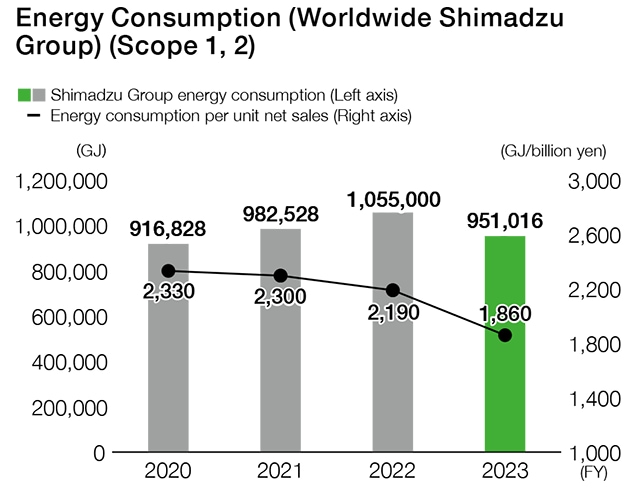
Energy-related CO2 emissions
(Shimadzu Group in Japan and Overseas) (Scope 1, 2)
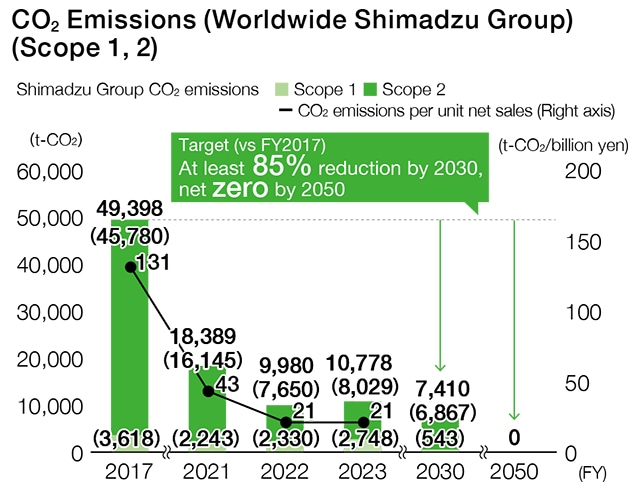
Shimadzu Group CO₂ Emissions (Scope 1, 2, Japan and Overseas)
Unit :t-CO₂
| 2022 | 2023 | 2024 | 2025 | |
|---|---|---|---|---|
| Scope1 | 2,330 | 2,624 | 2,860 | 2,897 |
| Scope2 (Market-based) | 7,650 | 7,785 | 6,975 | 5,874 |
| Scope2 (Location-based) | 45,285 | 46,595 | 46,316 | 45,529 |
Internal Carbon Pricing
To facilitate investment decisions that contribute to decarbonization, we have established an Internal Carbon Price (ICP) of JPY 15,000 per metric ton of CO₂. The ICP is incorporated into the evaluation of capital investments, enabling us to take climate-related risks and future carbon costs into account when making investment decisions.
Third Party Assurance of Environmental Data
Shimadzu Corporation received a third-party assurance from Deloitte Tohmatsu Sustainability Co., Ltd., to disclose highly reliable environmental impact data.
[Assurance coverage]
Period covered: April 1, 2024 to March 31, 2025
Scope of the report: Head office, works, research laboratory, branch offices, and sales offices of Shimadzu Corporation and major group companies
Scope and Extent: energy consumption (GJ), location-based Scope 1, 2 and Scope 3 emissions (t-CO2)
- *Click on the image to view the PDF.
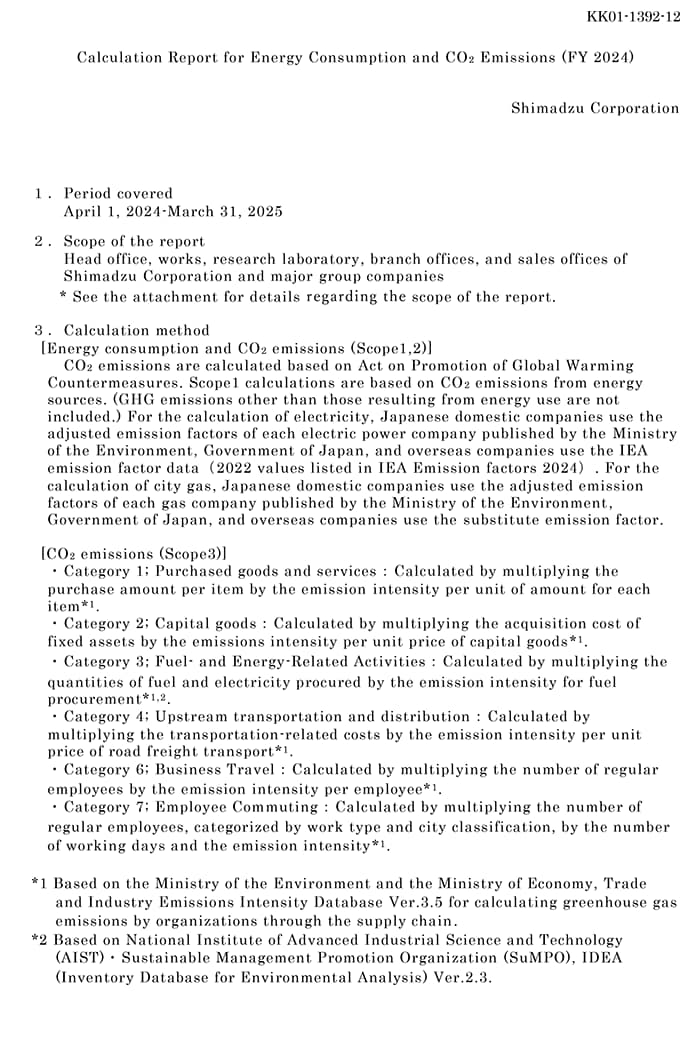
Calculation Report for Shimadzu group companies
Energy Consumption and CO2 Emissions from Energy
GHG emissions in the supply chain (By category)
Unit : thousand tons-CO2
| FY2021 | FY2022 | FY2023 | FY2024 | FY2025 | |||
|---|---|---|---|---|---|---|---|
| Scope 1 | Emissions | 2 | 2 | 3 | 3 | 3 | |
| Scope 2 | Emissions (market-based) | 16 | 8 | 8 | 7 | 6 | |
| Scope 3 | 1 | Purchased Goods and Services | 484 | 560 | 532 | 929 | 955 |
| 2 | Capital Goods | 14 | 63 | 61 | 66 | 60 | |
| 3 | Fuel and Energy-related Activities | 6 | 1 | 2 | 8 | 8 | |
| 4 | Upstream Transportation and Distribution | 6 | 9 | 8 | 51 | 51 | |
| 5 | Waste Generated in Operations | 2 | 2 | 1 | 1 | 1 | |
| 6 | Employee Business Travel | 2 | 2 | 2 | 2 | 2 | |
| 7 | Employee Commuting | 4 | 4 | 1 | 5 | 5 | |
| 8 | Upstream Leased Assets | 0* | 0* | 0* | 0* | 0* | |
| 9 | Downstream Transportation and Distribution | 0* | 0* | 0* | 0* | 0* | |
| 10 | Processing of Sold Products | 0* | 0* | 0* | 0* | 0* | |
| 11 | Use of Sold Products | 1,578 | 1,547 | 1,527 | 1,517 | 1,513 | |
| 12 | End-of-Life Treatment of Sold Products | 2 | 2 | 2 | 2 | 2 | |
| 13 | Downstream Leased Assets | 0* | 0* | 0* | 0* | 0* | |
| 14 | Franchises | 0* | 0* | 0* | 0* | 0* | |
| 15 | Investments | 0* | 0* | 0* | 0* | 0* | |
- *0 means less than 500ton.
Cat11 is estimated based on the hypothesis, our products would be used for 10 years by customer.
Reducing of CO₂ Emissions Across the Supply Chain (Scope 3)
The Company is also working to reduce CO2 emissions across the supply chain.
In particular, to reduce Scope 3 emissions, it works with suppliers to lower environmental impact across the full product lifecycle.
Since 2021, the Company has encouraged suppliers to undergo energy efficiency assessments, and 39 suppliers had done so by FY2025. The Company will continue deepening dialogue with business partners and working to reduce greenhouse gas emissions across the supply chain. In FY2026, it plans to step up these efforts further, including Scope 3 initiatives.

- *Scope3:Indirect emissions from supply chain activities other than Scope 1, 2
Reducing CO2 Emissions from Logistics
We are also engaged in measures to reduce CO2 emissions during shipment, up to the point that products are delivered to the customer.
By improving the truck loading rate and promoting a modal shift, Shimadzu Logistics Service Corporation has reduced CO2 emissions by about 100 tons or more since fiscal 2011.
Primary activities include mixing shipments to optimize utilization of trips between locations, consolidating smaller freight shipments into chartered shipments, consolidating freight from regular commercial routes into chartered shipments, shifting freight modes to rail or ship, and shifting package with wood to reinforced cardboard.
The transport system is used to share information about transporting goods between different divisions, so that the above measures can be implemented more efficiently within daily operations.
For export shipments, an in-house bonded warehouse area has been used to process customs without the need to transport items by truck. After clearing customs, items are transported by low-emission shuttle trucks (running on natural gas) to airports or seaports. Shipping containers are reused for shipping both exports and imports. Hybrid work vehicles are also being introduced.
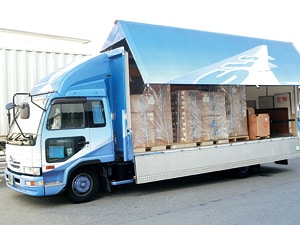
Shuttle freight to airport
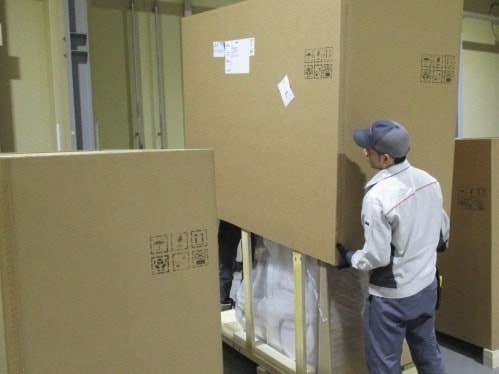
Package with reinforced cardboard
Reducing Energy Consumption in IT Environments
Shimadzu Business Systems Corporation, which manages various Shimadzu Group servers, is reducing power consumption by migrating to virtual servers. Virtual servers use server resources more efficiently by establishing multiple server environments within a single physical server. Using virtual servers not only reduces electrical power consumption, but also can save space and reduce expenses. Consolidating 21 servers into 10 servers in FY 2016 has reduced power consumption by an estimated 32,850 kWh per year.
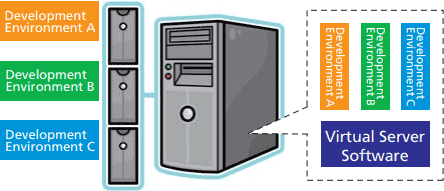
Diagram of Switching to Virtual Servers
Installation of task light
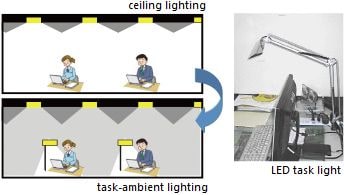
As part of power-saving measures after the Great East Japan Earthquake in FY 2011, we have been deploying measures to reduce ceiling lighting and install task-ambient lighting that illuminates only the immediate work area.
Environmentally Conscious Building Design and Use of Solar Panels
The Head Office building within the Sanjo Works site incorporates a variety of environmentally-friendly features, such as a passive ventilation system, natural and artificial lighting sensors, radiant air conditioning systems, and active use of local wood materials sourced from within Kyoto Prefecture.
In terms of the Kyoto standards for the Comprehensive Assessment System for Built Environment Efficiency (CASBEE), which also evaluates buildings based on how well they typify Kyoto, the building earned an "S" score, which is the highest available.
The Quality Center at Sanjo Works and the South Building No. 1 at Seta Works were insulated and lighting in all office areas was converted to LED lighting. In addition, they were designed and built for energy efficiency with high-efficiency air-conditioning and transformer systems.
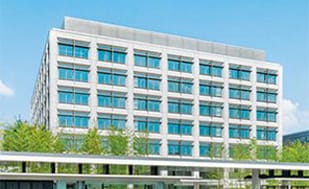
Head Office building at Sanjo Works
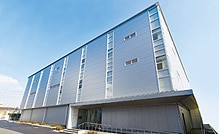
The Quality Center at Sanjo Works
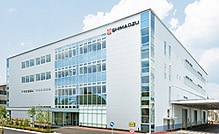
the South Building No. 1 at Seta Works
In addition, our group companies are working to reduce CO2 emissions and electricity consumption through measures such as the installation of solar panels and LED lighting. At our production sites in Malaysia and Tianjin, China, we cover our electricity consumption through on-site power generation using solar panels. We are also taking environmental measures, such as installing solar panels, at our production site in Shimane and our research laboratories.
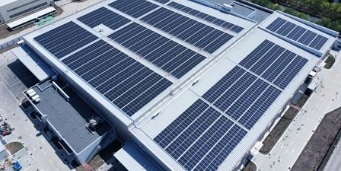
Tianjin Shimadzu Hydraulic Equipment Co.,Ltd. (Tianjin, China)
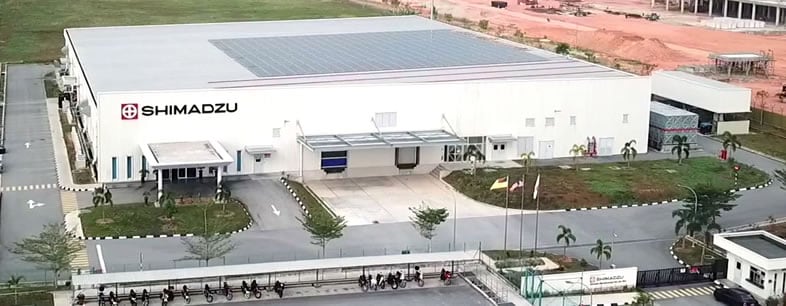
Shimadzu Manufacturing Asia Sdn. Bhd.(Mlaysia)
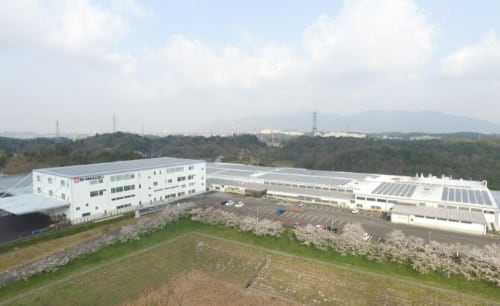
Shimane Shimadzu Corporation
(Shimane, Japan)
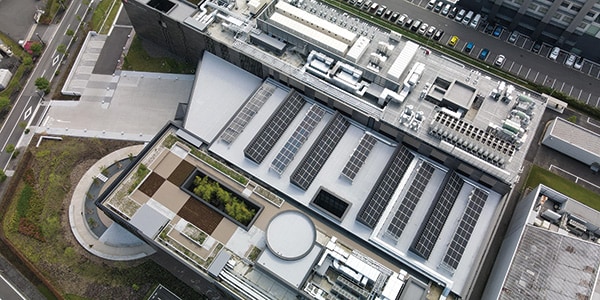
Keihanna Technology Research Laboratory (Kyoto, Japan)