


Human rights are the fundamental rights that every person is born with, allowing them to live with dignity and happiness. These rights are universal and inherent to all human beings.
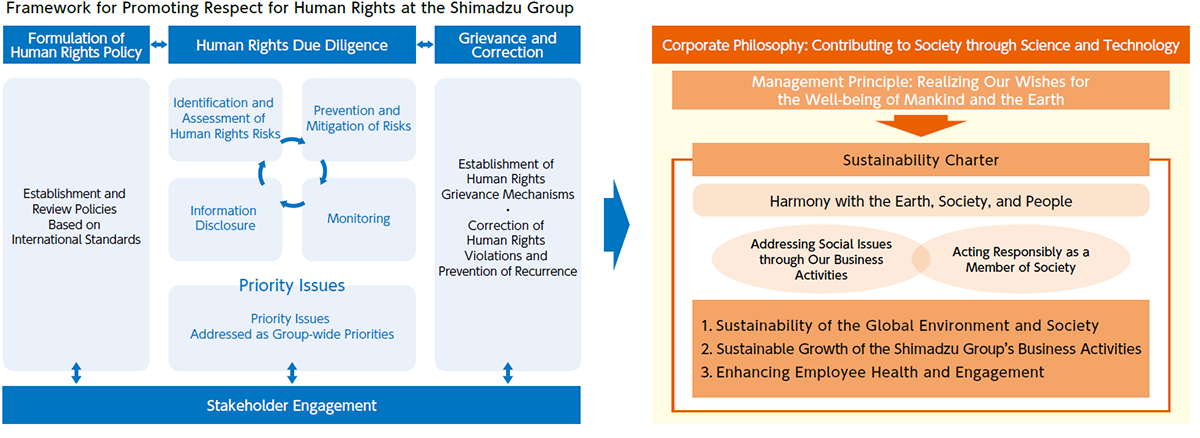
The Shimadzu Group recognizes that respecting the human rights of all stakeholders involved in our business is a core principle of corporate activity. We have established a framework for promoting respect for human rights based on international norms and governmental guidelines. This includes our Human Rights Policy, Human Rights Due Diligence, and Mechanisms for Remedy and Correction.
Framework for Promoting Respect for Human Rights
We define our commitment to human rights in the Shimadzu Group Human Rights Policy, and conduct human rights due diligence to identify and assess human rights risks (negative impacts) that we are or may be involved in. Priority risks are designated as “key issues,” and we work to mitigate these through education and regular monitoring, along with appropriate information disclosure.
We also establish mechanisms to provide prompt remedies in the event of human rights issues.
Human Rights Policy
The Shimadzu Group has formulated the Shimadzu Group Human Rights Policy as its highest-level standard for human rights initiatives, based on international norms, governmental guidelines, and input from external experts.
Shimadzu Group Human Rights Policy
Shimadzu Corporation and its group companies (hereafter “Shimadzu Group”) firmly believe that respecting the human rights of all stakeholders involved in our business is fundamental to corporate activity. We understand the requirements of international norms related to human rights and define this policy as our highest code of conduct in this area. Under this policy, we aim to “Contribute to Society through Science and Technology“ - our corporate philosophy – while respecting the human rights of all stakeholders, and promoting business activities that realize our management principle, “Realizing Our Wishes for the Well-being of Mankind and the Earth.“
- Scope of Application
This policy applies to all officers and employees* of the Shimadzu Group.
We also ask our business partners, including suppliers and agents, to support and engage in human rights initiatives based on this policy. - International Norms
The Shimadzu Group understands and respects the following international norms related to human rights:・ United Nations Guiding Principles on Business and Human Rights (UNGPs) ・ ILO Declaration on Fundamental Principles and Rights at Work ・ UN International Bill of Human Rights (Universal Declaration of Human Rights and International Covenants) ・ OECD Guidelines for Multinational Enterprises
We also respect national action plans based on the UNGPs and support the Ten Principles of the UN Global Compact, to which Shimadzu Corporation is a signatory. - Activities
To promote respect for human rights, the Shimadzu Group engages in the following activities:・ Human Rights Due Diligence (Identification and assessment of human rights risks across all business activities, selection of key issues, monitoring, and prevention/mitigation of risks) ・ Establishment of Remedy Channels (Correction of human rights violations and prevention of recurrence) ・ Education and Training (For Shimadzu Group officers, employees, and business partners) ・ Dialogue with Stakeholders ・ Transparent Information Disclosure - Organizational Structure
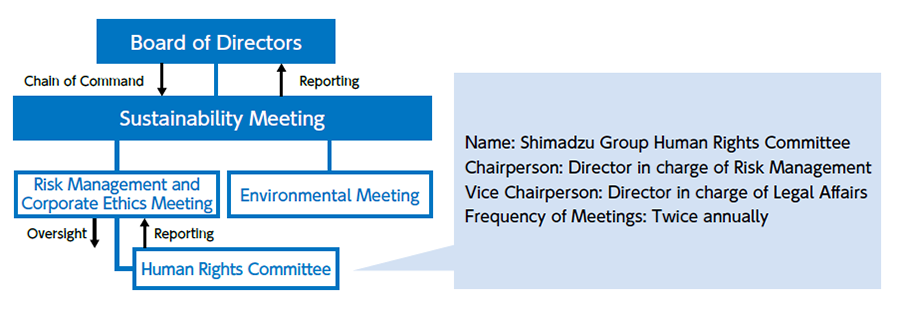
Under the Shimadzu Group Sustainability Meeting, we have established the Shimadzu Group Human Rights Committee (hereafter “Human Rights Committee”).
The Human Rights Committee oversees activities to fulfill the Shimadzu Group’s responsibility to respect human rights. - Key Issues
Through human rights due diligence based on the UNGPs, the Shimadzu Group identifies “key issues” related to human rights risks and prioritizes efforts to mitigate them.
These key issues are evaluated and reviewed by the Human Rights Committee and discussed at the Group Sustainability Meeting. They are revised as needed in response to changes in the external environment or within the Shimadzu Group. Details of key issues are defined separately. -
Governance Structure
This policy is established and revised with the approval of the Board of Directors.
The Board oversees the Shimadzu Group’s human rights initiatives through regular reports from the Group Sustainability Meeting and the Human Rights Committee.
The policy is reviewed as necessary in response to changes in the external environment.
- (*) Officers: Internal/external directors, executive officers with titles, general executive officers, etc.
Employees: All individuals employed by the company regardless of employment type (including seconded employees and temporary staff)
Established: September 30, 2025
Shimadzu Corporation
President & CEO: Yasunori Yamamoto
This policy was established by resolution of the Shimadzu Corporation Board of Directors.
Governance and Promotion Structure
The Shimadzu Group Human Rights Committee has been established under the Risk Management & Corporate Ethics Board, a specialized subcommittee of the Shimadzu Group Sustainability Meeting. The Board of Directors supervises the Shimadzu Group’s human rights initiatives through regular reports related to the Sustainability Meeting.
The Human Rights Committee includes heads of departments related to human rights, such as Risk Management, Human Resources, Procurement, Legal Affairs, and the Sustainability Management Unit of Corporate Strategy, and oversees both internal and external human rights initiatives.
Human Rights Due Diligence
1. Identification and Assessment of Human Rights Risks
Referring to international norms and administrative guidelines, our company identifies that should be respected and evaluate them based on two axes: impact on human rights and business potential. The Human Rights Committee leads this process, incorporating expert opinions and the business status of group companies to identify and assess negative impacts related to human rights risks within our group.
The human rights risks prioritized by our group are discussed annually at the Sustainability Conference and selected as key issues.
Main Human Rights Risks by Stakeholder
| Stakeholder | Main Human Rights Risks |
|---|---|
| Employees | Various forms of harassment, occupational health and safety, freedom of association, discrimination (employment/assignment), insufficient/unpaid wages, excessive/unfair working hours |
|
Supply Chain |
Child labor, forced labor, bribery/corruption, conflict-affected areas, various forms of harassment, intellectual property infringement |
|
Customers |
Consumer safety and right to know, bribery/corruption, various forms of harassment, right to privacy |
| Local Communities | Climate change-related issues, freedom of relocation, rights violations of indigenous and local residents, discrimination (race/ethnicity) |
2. Prevention and Mitigation of Risks
Unfair Treatment and Discrimination
Our group’s “Corporate Code of Ethics,” which serves as a behavioral guideline for employees, includes respect for individual human rights and prohibits discrimination based on race, gender, language, nationality, religion, disability, beliefs, or other reasons. We also establish behavioral standards for “Respect for Human Rights and Diversity,” promoting a workplace that respects all employees' human rights and embraces diversity in personality and individuality.
Corporate Philosophy
Shimadzu Group Sustainability Charter
Promoting Diversity
Prohibition of Forced and Child Labor
To promote responsible procurement, we have established the “Shimadzu Group CSR Procurement Guidelines,” which request understanding and compliance from business partners. These guidelines cover five areas including human rights and labor, and we conduct assessments and provide improvement support to business partners.
Our group eliminates child labor, forced labor, and human trafficking at all stages of business activities, promoting sustainability-conscious operations. In addition to self-assessments, we confirm and improve efforts through supplier communication such as interviews. Assessment results are used as criteria for selecting business partners.
Sustainable Procurement
Compliance with the Modern Slavery Act
Response to Conflict Minerals
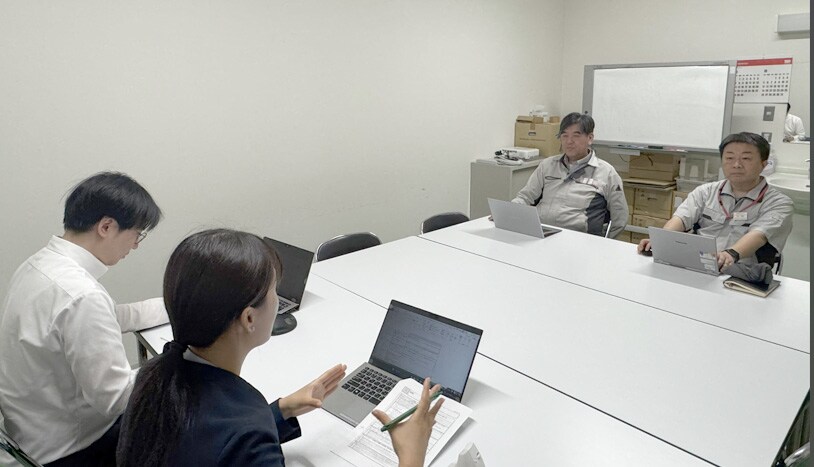 A scene from the face-to-face supplier communication session.
Prohibition of Harassment
Our group’s “Corporate Code of Ethics” stipulates the creation of a vibrant workplace free from harassment. We work to prevent power harassment, sexual harassment, maternity/childcare harassment, and customer harassment in the workplace. We have established consultation and reporting channels to respond promptly and fairly.
We strictly protect the privacy of those who consult or report and prohibit disadvantageous treatment. To instill corporate ethics awareness, we conduct annual ethics education and harassment prevention training via e-learning or booklets.
Establishment of a Safe and Healthy Work Environment and Labor Practices
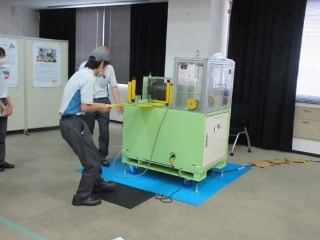
Since 1921, our group has designated a Factory Safety Day to promote safe and hygienic workplaces, based on the belief that safety and hygiene activities are inseparable from corporate operations. We comply with laws and internal regulations on occupational health and safety, and conduct safety education, including passing down safety skills from veterans to younger employees, and thorough risk assessments.
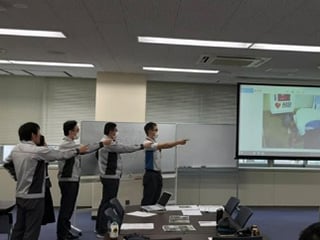
Recent trends show that about one-third of workplace accidents involve inexperienced workers with less than five years of service. To prevent such incidents due to lack of experience, we provide safety education and hazard prediction training for new and inexperienced employees. This includes using VR-based safety experience devices and conducting training for key departments to improve hazard prediction skills.
Occupational Health and Safety
Health and Productivity Management
We strive to maintain appropriate labor practices based on labor laws in each country, including reducing overtime, setting maximum working hours, ensuring appropriate living wages, provision of annual paid leave, and correcting gender wage gaps.
Freedom of Association and Recognition of Collective Bargaining Rights
Our Group has company-specific labor unions at 13 domestic group companies, centered on the Shimadzu Labor Union. With the aim of improving working conditions and labor environments, facilitating smooth management, and promoting business development, we have established various labor–management councils and committees at different organizational levels and by functional area, thereby fostering sound relationships based on mutual trust.
At Shimadzu Corporation, in principle all regular employees except managers are members of the labor union. The unionization rate among regular employees at Shimadzu Corporation on a standalone basis is 79.4%, and the unionization rate among regular employees excluding managers is 99.9%. The organization rate across the entire domestic group is 61.9% (13 out of 21 companies, including Shimadzu Corporation). All figures are as of March 31, 2025.
【Labor–Management Councils at Shimadzu Corporation】
The most recent agenda items, upcoming meetings, and summaries of other regular meetings are as follows.
- Central Management Council: This meeting allows labor and management to discuss important matters concerning management and business operations and is normally held twice a year. The most recent meeting was held in December 2025, during which labor and management reviewed the mid-term management plan for fiscal years 2023–2025 and exchanged views on future policies. The next meeting is scheduled for July 2026.
- Spring Collective Bargaining: Once a year, consultations and collective bargaining are held regarding labor terms and conditions. In February–March 2025, based on the union’s demands, discussions were held regarding wage revisions and improvements to working conditions. The next meeting is scheduled for February–March 2026.
Other regular meetings:
| Name of Council/Committee | Content | Meeting Frequency |
|---|---|---|
| Management Council | Discussions on Company's management, business conditions and status of business execution | Once or Twice/year |
| District Council | Discussions on departmental issues | Monthly |
| Company-wide Health and Safety Committee | Discussions on company-wide health and safety initiatives | Once a year |
| Health and Safety Committee at each site | Discussions on health and safety at each site | Monthly |
| Health and Safety Committee at HQ Plant | Discussions on health and safety initiatives in each district of the Head Office Plant | Monthly |
| Labor Committee | Exchanges of opinions and discussions on individual issues between labor and management | Monthly |
3. Monitoring
We set KPIs related to efforts to prevent and mitigate human rights risks and conduct monitoring centered on the Human Rights Committee and Sustainability Meeting.
4. Information Disclosure
Information related to human rights is appropriately disclosed through integrated reports, external websites, etc.
Establishment of Human Rights Remedy Mechanisms
To prevent, detect early, and respond to issues related to corporate ethics including human rights, we have established reporting channels both inside and outside the company. These are available to all group employees, temporary staff, and contractors working within the company, and anonymous reports are accepted.
In FY2024, there were 164 reports across the group. We protect informants based on laws, conduct necessary investigations, and implement corrective and recurrence prevention measures.
We also have a separate human rights grievance mechanism that accepts complaints from stakeholders, including business partners and customers with whom we do not have direct business relationships, as well as members of local communities.
Compliance and Risk Management
Human Rights Consultation Desk (currently only available in Japanese)
Education on Human Rights
Our group has formulated the “Shimadzu Group Corporate Ethics Guidelines,” summarizing the essence of the Corporate Code of Ethics. These guidelines emphasize human rights, compliance, and respect for diversity, and are used for annual education.
In FY2024, we conducted human rights education related to the supply chain for 51 overseas group companies, achieving a 100% participation rate.